
North America
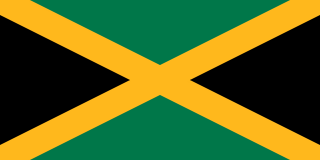
Jamaica is an island nation in the Caribbean Sea, sitting south of Cuba and west of Haiti.
Jamaica's name comes from the Taíno word 'Xaymaca,' meaning 'land of wood and water,' reflecting the island's forested, well-watered landscape as encountered by its original Indigenous inhabitants.
Landscape: Mountainous interior (the Blue Mountains, famous for coffee) surrounded by coastal plains and beaches.
Climate: Tropical, warm year-round with a wet season and hurricane risk.
Food: Jerk chicken, meat marinated in a spiced, smoky seasoning, is Jamaica's best known culinary export, alongside ackee and saltfish, the national dish.
Kingston became Jamaica's capital in 1872, replacing Spanish Town, chosen for its excellent natural harbour, one of the largest in the Caribbean. With a population of around 585,000 in the metropolitan area, it's widely regarded as the birthplace of reggae music.
The doctor bird, a type of hummingbird found only in Jamaica, is the national bird, and the lignum vitae, whose wood is among the densest in the world, is the national flower and tree.
Jamaican straw craft, including woven hats and baskets, has deep roots in the island's rural traditions, and Jamaican wood carving, particularly using local hardwoods, remains an actively practised craft. Jamaican patchwork quilting and traditional pottery from the Junction area remain practised rural crafts, alongside a strong woodcarving tradition using local hardwoods like mahogany.
Dunn's River Falls, a series of cascading waterfalls that visitors can climb, is Jamaica's most visited natural landmark, and the Blue and John Crow Mountains, a UNESCO World Heritage Site, historically sheltered Maroon communities of escaped enslaved people who resisted British colonial rule. The Bob Marley Museum in Kingston, housed in the reggae icon's former home, is one of the country's most visited cultural sites.
The Jamaican boa, the island's largest native snake, and the Jamaican iguana, once thought extinct until rediscovered in 1990, are both found nowhere else in the world.
Jamaica is majority Christian, predominantly Protestant, and Rastafari, a religious and cultural movement that emerged in Jamaica in the 1930s, has had significant global cultural influence well beyond its relatively small number of adherents on the island.
Jamaica is a significant exporter of alumina and bauxite, alongside sugar and rum, and tourism forms a particularly large share of the national economy given the island's global reputation as a Caribbean destination.
Independence Day on August 6th marks 1962, when Jamaica gained sovereignty from British colonial rule, celebrated nationwide with concerts and cultural festivals in the surrounding Jamaica Festival period. Emancipation Day on August 1st, marking the 1834 abolition of slavery, is observed the day before Independence Day, together forming one of the country's most significant annual periods of national reflection and celebration.
Track and field holds a place in Jamaican national identity matched by few other countries and any other sport, the island having produced a remarkable succession of the world's fastest sprinters relative to its small population, a phenomenon widely studied and admired internationally. Cricket also carries deep historical significance, Jamaica having been a foundational part of the West Indies' dominant cricket era through the 1970s and 80s. Jamaica's bobsled team, despite the island having no snow, famously competed at the 1988 Winter Olympics, a story later dramatised in film worldwide.
Jamaica is a parliamentary constitutional monarchy, with the British monarch as ceremonial head of state represented domestically by a Governor-General, while a Prime Minister holds real executive power accountable to a bicameral parliament. The country has debated transitioning to a republic in recent years, removing the monarchy entirely, a move several other Caribbean Commonwealth nations have also considered or pursued.
Blue Mountain Peak is Jamaica's highest point at 2,256 metres, home to some of the world's most prized coffee, grown at high altitude in the surrounding range. The lowest point sits at sea level around the island's coastline.
There's no especially close match for Jamaica's flag, the diagonal gold cross dividing green and black triangles is a genuinely distinctive layout among national flags worldwide, and Jamaica holds the notable distinction of being one of only a handful of countries whose flag uses none of the three most common flag colours, red, white, or blue, at all.
Adopted in 1962 at independence from Britain, one of only a handful of national flags that doesn't include red, white, or blue at all.
The birthplace of reggae music and home to Usain Bolt, the fastest man ever recorded.
Play today's Flagpie →© Flagpie 2026