
Europe
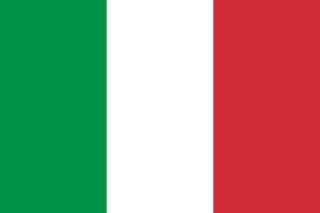
Italy extends south from Central Europe into the Mediterranean Sea in the shape of a boot, bordered by France, Switzerland, Austria, and Slovenia to the north, with the islands of Sicily and Sardinia off its coast.
Italy's name is thought to derive from an ancient word for the peninsula's southern tip, possibly linked to a word for calf or cattle in an old Italic language, and was gradually extended by the Romans to describe the whole peninsula.
Landscape: Dominated by the Apennine mountains running down the length of the country, with the Alps along the northern border and coastline on nearly every side.
Climate: Mediterranean along the coasts, with colder, more alpine conditions in the northern mountains.
Food: Pasta and pizza are the best known exports, though Italian cooking varies hugely by region, from Sicily's seafood to the north's rice and butter-based dishes.
Rome has been continuously inhabited and politically significant for close to three thousand years, first as the centre of the Roman Republic and Empire, later as the seat of the Papal States, and since 1871 as capital of unified Italy. With a population of around 2.8 million, it's rare among world capitals in holding another fully sovereign state, Vatican City, entirely within its boundaries.
The daisy is Italy's national flower, said to have been a favourite of Queen Margherita of Savoy, the country's first queen consort after unification. The Italian wolf, once hunted to the brink of extinction domestically, has become a strong symbol of the country's more recent conservation recovery efforts.
Italy has an outsized global reputation in fashion and design, home to houses like Gucci and Prada, alongside centuries-old craft traditions in Murano glassmaking near Venice and leatherworking in Florence, both still practised using largely traditional techniques.
The Colosseum in Rome, completed around 80 AD, remains one of the most visited ancient structures in the world, alongside the Leaning Tower of Pisa and the ruins of Pompeii, a Roman city preserved almost intact after being buried by a volcanic eruption in 79 AD.
The Marsican brown bear, a critically endangered subspecies found only in central Italy's Abruzzo region, is one of the country's most closely watched conservation efforts. The Alpine ibex and golden eagle are both found in Italy's northern mountain regions.
Italy is majority Roman Catholic, home to the Vatican and the Pope, and Catholic tradition runs deeply through Italian culture, art, and public life, even as regular religious observance has declined among younger generations. Italy has also become home to growing immigrant communities practising Islam and other faiths in recent decades.
Italy is a major exporter of machinery, cars, fashion and luxury goods, and food and wine, with regional specialities like Parmesan cheese and Chianti wine protected by law based on where they're produced.
Ferragosto on August 15th, originally a Roman-era holiday later absorbed into the Catholic calendar as the Assumption of Mary, is when much of Italy effectively shuts down for a mid-summer break, with many businesses closing for the surrounding week or two entirely. Liberation Day on April 25th marks the end of Nazi occupation in 1945, and Republic Day on June 2nd marks the 1946 referendum that abolished the monarchy. Epiphany on January 6th, marking the visit of the Three Kings, is traditionally when Italian children receive gifts from La Befana, a benevolent witch figure, rather than at Christmas itself.
Football is overwhelmingly Italy's most popular sport, the national team having won the World Cup four times, and cycling carries deep historical weight too through the Giro d'Italia, one of the sport's three Grand Tours alongside the Tour de France and Vuelta a España.
Italy is a parliamentary republic, with a largely ceremonial President as head of state and a Prime Minister holding real executive power, accountable to Parliament. The country has had a notably high number of different governments since the Second World War, a reflection of its fragmented, multi-party political landscape and relatively low bar for triggering new elections.
Mont Blanc, shared with France, gives Italy its highest point at 4,809 metres on the shared massif, though Italy's own summit marker sits at a very slightly lower elevation than France's due to the exact border line. The lowest point is a reclaimed area near Ferrara in the north, sitting around 3 metres below sea level.
Mexico's flag uses the exact same green-white-red vertical tricolour as Italy, the only real difference being Mexico's detailed central eagle-and-serpent emblem, meaning at a distance or in poor lighting the two can be genuinely hard to tell apart. Hungary and Bulgaria both also use red, white, and green together, though in different arrangements and orders that make them considerably easier to distinguish from Italy's specific layout.
Adopted in its current tricolour form in 1946 when Italy became a republic, based on a design that first appeared in 1797 inspired by the French tricolour.
Has more UNESCO World Heritage Sites than any other country on Earth.
Play today's Flagpie →© Flagpie 2026