
Europe
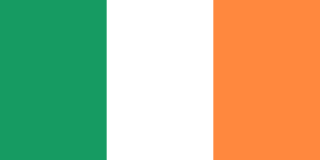
Ireland occupies most of the island of Ireland in the North Atlantic, sharing its only land border with Northern Ireland, part of the United Kingdom, to the northeast.
Ireland's name comes from Éire, the Irish name for the island, itself derived from an ancient goddess figure in Irish mythology associated with the land. The English form 'Ireland' simply combines this with the Germanic suffix 'land.'
Landscape: Low central plains ringed by coastal hills and low mountains, with a famously green landscape due to consistent rainfall.
Climate: Temperate maritime, mild year-round with frequent rain and few weather extremes.
Food: A traditional Irish breakfast and soda bread are well known staples, alongside a strong tradition of stew made with lamb or beef.
Dublin was founded by Vikings around 841 AD as a trading settlement, its name derived from the Irish 'Dubh Linn,' meaning 'black pool,' referring to a dark tidal pool where the settlement first grew. With a population of around 1.2 million across the greater Dublin area, it has remained Ireland's dominant city and capital since medieval times.
The shamrock, a three-leafed clover, is closely tied to Saint Patrick, who is said to have used it to explain the Christian Holy Trinity to pagan Irish audiences, and it remains Ireland's most recognised informal symbol. The harp is Ireland's official national emblem, appearing on official government documents and currency.
Irish linen and wool weaving, particularly the thick cream-coloured Aran sweater, are among Ireland's best-known traditional textiles, alongside a long tradition of Celtic-style jewellery and metalwork drawing on patterns found in artefacts thousands of years old.
The Cliffs of Moher, rising dramatically from the Atlantic on Ireland's west coast, are among the country's most visited natural landmarks, alongside Newgrange, a prehistoric monument older than both Stonehenge and the Egyptian pyramids.
Ireland has relatively few native land mammals due to its island isolation after the last ice age, though red deer, particularly in Killarney National Park, represent one of its oldest continuous wild populations. Puffins nest in large colonies along parts of Ireland's rugged coastline.
Ireland is historically and still majority Roman Catholic, though religious observance has declined sharply in recent decades, particularly following a series of institutional abuse scandals that significantly damaged the Church's public standing. Ireland has also become increasingly diverse through immigration in recent decades.
Ireland is a major exporter of pharmaceuticals and medical devices, alongside technology and financial services, with a large number of major multinational companies basing their European operations there due to favourable corporate tax policy.
Saint Patrick's Day on March 17th, honouring Ireland's patron saint, is the country's most internationally celebrated holiday by a wide margin, marked worldwide by parades and greenery far beyond Ireland's own borders, thanks largely to the scale of the Irish diaspora. Easter Rising commemorations in April mark the pivotal 1916 rebellion against British rule, a defining event in the country's path to independence. Bloomsday on June 16th, celebrated particularly in Dublin, marks the single day James Joyce's novel Ulysses takes place across, with enthusiasts retracing the book's route through the city dressed in period costume.
Gaelic football and hurling, both administered by the Gaelic Athletic Association and played almost exclusively at amateur level, hold a uniquely central place in Irish sporting and community identity, with All-Ireland finals drawing some of the largest domestic sporting crowds anywhere in Europe relative to Ireland's small population. Rugby and horse racing both also carry deep cultural significance.
Ireland is a parliamentary republic, with a largely ceremonial President as head of state and a Taoiseach (Prime Minister) holding real executive power, accountable to the Dáil, the lower house of parliament. The country makes frequent use of national referendums for significant constitutional changes, including on issues like marriage equality and abortion in recent years.
Carrauntoohil, in County Kerry, is Ireland's highest point at 1,038 metres, modest compared to peaks on most other continents but locally significant as the country's most popular serious hiking destination. The lowest point sits at sea level along Ireland's extensive Atlantic coastline.
Ivory Coast's flag uses the exact same three colours as Ireland, green, white, and orange, but in reverse order, making the two flags genuine mirror images of each other and a commonly cited example of accidental national flag confusion. Italy uses a similar green-white-and-third-colour vertical layout too, though with red rather than orange, different enough in that final colour that it's less likely to be mixed up with Ireland specifically.
Adopted in 1848 as a gift from French sympathisers during a wave of European revolutions, though it wasn't formally the state's official flag until Irish independence in the 1920s.
Home to more sheep than people.
Play today's Flagpie →© Flagpie 2026