
Asia
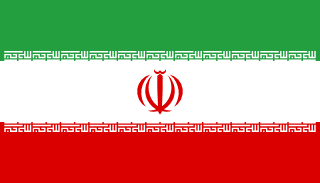
Iran sits in the Middle East, bordered by Iraq to the west, Turkey and Azerbaijan and Armenia to the northwest, Turkmenistan to the northeast, and Afghanistan and Pakistan to the east, with coastlines on the Caspian Sea and the Persian Gulf.
Iran's name comes from an ancient word meaning 'land of the Aryans,' referring to the Indo-Iranian peoples who settled the region thousands of years ago. The country was commonly called Persia in the West until 1935, when the government requested the name Iran be used internationally instead.
Landscape: Mostly a high, arid plateau ringed by mountains, including the Zagros and Alborz ranges, with deserts across the central interior.
Climate: Mostly arid to semi-arid, with a Caspian Sea coastal strip that's notably wetter and more humid.
Food: Kebabs and rice-based dishes like tahdig, a crispy rice dish, are central to Iranian cooking, alongside a strong tradition of herb-heavy stews.
Tehran became Iran's capital in 1796 under the Qajar dynasty, chosen partly for its proximity to the Caucasus region the dynasty was defending at the time. With a population of around 8.7 million in the city itself, and closer to 15 million across greater Tehran, it's the largest city in Western Asia.
The Persian lion, once found throughout the region, is closely tied to Iranian national identity and historically appeared on the country's flag before the 1979 revolution. The water lily has been considered Iran's national flower since ancient Achaemenid times.
Persian carpet weaving is one of the most internationally recognised craft traditions in the world, with distinct regional styles developed over thousands of years, and Persian miniature painting and calligraphy remain highly regarded artistic traditions.
Persepolis, the ceremonial capital of the ancient Achaemenid Empire built around 500 BC, remains one of Iran's most significant archaeological sites, alongside the historic bazaars and mosques of Isfahan. Naqsh-e Jahan Square in Isfahan, one of the largest public squares in the world, is ringed by mosques and palaces dating back to the 17th-century Safavid dynasty.
The Asiatic cheetah, now critically endangered, survives only in small numbers in Iran's central deserts, the last population of this subspecies remaining anywhere in the world.
Iran is overwhelmingly Shia Muslim, the largest Shia-majority country in the world, and Islam plays a central role in the country's governance and legal system since the 1979 revolution. Persian New Year, Nowruz, predates Islam and remains the country's most significant annual celebration, marking the arrival of spring and shared across several other Central and South Asian nations.
Iran holds some of the largest oil and natural gas reserves in the world, though international sanctions have significantly affected its ability to export freely, alongside carpets, pistachios, and petrochemical products.
Nowruz, the Persian New Year marking the spring equinox, is Iran's most significant holiday by a wide margin, predating Islam and celebrated across a wide swathe of Central and South Asia, marked in Iran with a two-week national holiday period. Islamic Revolution Day on February 11th marks the 1979 overthrow of the Shah, and Ashura, commemorating the martyrdom of Imam Hussein, is observed with particular solemnity given Iran's majority Shia population.
Wrestling holds deep historic and cultural significance in Iran, tied to the traditional gymnasium practice known as varzesh-e bastani, and the country has produced a remarkable number of Olympic wrestling champions. Football is also hugely popular, and volleyball has grown significantly in domestic following in recent decades.
Iran is an Islamic republic, combining elected institutions, a President and parliament, with a Supreme Leader who holds ultimate authority over the country's military, judiciary, and broad policy direction, a role currently held by Ayatollah Ali Khamenei. This dual system, established after the 1979 revolution that overthrew the Shah, is genuinely distinctive among modern governments worldwide.
Damavand, a dormant volcano in the Alborz Mountains, is Iran's highest point at 5,610 metres, the tallest peak in the Middle East and a significant symbol in Persian mythology and poetry. The lowest point is the Caspian Sea shoreline, sitting around 28 metres below global sea level, since the landlocked Caspian sits well below the ocean's own level.
There's no especially close match for Iran's flag, the green-white-red horizontal stripes combined with the distinctive red Allah emblem at the centre and the repeated Takbir script along the stripe borders make it genuinely distinctive worldwide. Its closest relative in terms of base colours alone might be Hungary or Bulgaria for also using green, white, and red, though arranged completely differently and without any of Iran's religious script or central symbolism.
The green-white-red tricolour dates to the early 20th century, with the current emblem and script added after the 1979 revolution.
Home to one of the highest numbers of UNESCO World Heritage Sites in the Middle East.
Play today's Flagpie →© Flagpie 2026