
Asia
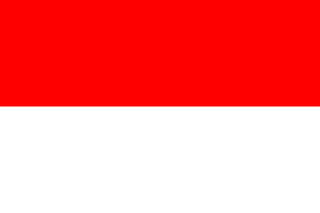
Indonesia is the world's largest island nation, spread across Southeast Asia between the Indian and Pacific Oceans, sharing land borders with Malaysia, Papua New Guinea, and Timor-Leste.
Indonesia's name combines the Greek 'Indos' (India) and 'nesos' (island), coined by European scholars in the 19th century to describe the Indian Ocean island region, and later adopted by Indonesian nationalists themselves as the name for their independence movement and eventual nation.
Landscape: The world's largest archipelago, spread across more than 17,000 islands, with dense rainforest and significant volcanic activity throughout.
Climate: Tropical, hot and humid year-round with a distinct wet and dry season.
Food: Nasi goreng (fried rice) and satay are internationally known, alongside rendang, a slow-cooked spiced beef dish often cited as one of the best-tasting dishes in the world.
Jakarta has been Indonesia's capital since independence, growing from a Dutch colonial trading post originally called Batavia. With a population of around 10 million in the city itself, and over 30 million across the metropolitan area, it faces serious issues with sinking land and flooding, driving government plans to relocate the capital to a new purpose-built city, Nusantara, on the island of Borneo.
The Komodo dragon, the largest living lizard species, is found only on a small number of Indonesian islands and is a powerful symbol of the country's unique biodiversity. The Garuda, a mythical bird figure drawn from Hindu and Buddhist tradition, appears on Indonesia's national emblem.
Batik, a technique of dyeing fabric using wax-resist patterns, is one of Indonesia's most significant craft traditions, recognised by UNESCO, with distinct regional styles across Java and beyond. Indonesian shadow puppetry, wayang kulit, is another centuries-old art form still performed today.
Borobudur, the world's largest Buddhist temple, was built in the 9th century and remains one of Indonesia's most significant historical sites, alongside Prambanan, a large Hindu temple complex nearby.
The Komodo dragon, Sumatran tiger, and orangutan are all found only in Indonesia, though all three face significant conservation pressure from habitat loss. Indonesia's position across thousands of islands makes it one of the most biodiverse countries on Earth.
Indonesia has the largest Muslim population of any country in the world by a wide margin, though it also recognises Christianity, Hinduism, Buddhism, and Confucianism, with Bali in particular remaining majority Hindu. It's home to hundreds of distinct ethnic groups and languages spread across its many islands.
Indonesia is a major exporter of palm oil, coal, and natural gas, alongside textiles and electronics, and is one of the world's largest producers of palm oil specifically.
Independence Day on August 17th marks 1945, when Indonesia declared independence from Dutch colonial rule, celebrated nationwide with flag-raising ceremonies and traditional games. Eid al-Fitr, known locally as Lebaran, is the country's biggest holiday given Indonesia's status as the world's most populous Muslim-majority nation, marked by mass domestic travel as people return to their hometowns. Nyepi, the Balinese Day of Silence marking the Hindu New Year, is genuinely observed with the entire island of Bali shutting down for 24 hours, including its airport, a rare example of an entire local economy pausing by tradition.
Badminton holds a genuinely unique place in Indonesian sporting culture, the country having produced some of the sport's most successful international competitors for decades, treated with a level of national pride comparable to football in many other countries. Football itself is also hugely popular, even without the same level of international success.
Indonesia is a presidential republic and the world's third-largest democracy by population, with a President serving as both head of state and government, directly elected for five-year terms. The country's motto, Bhinneka Tunggal Ika (Unity in Diversity), reflects the genuine challenge of governing a nation spread across thousands of islands and hundreds of distinct ethnic groups. Indonesia holds one of the largest single-day elections in the world, with hundreds of thousands of polling stations opening simultaneously across its scattered island geography.
Puncak Jaya, in the Papua region, is Indonesia's highest point at 4,884 metres, and is unusual for a peak near the equator in carrying a permanent glacier, though it's retreating rapidly. The lowest point sits at sea level across Indonesia's vast archipelago.
Monaco's flag is essentially identical to Indonesia's, both use the exact same red-over-white horizontal split, differing only in slightly different proportions, a coincidence the two countries have occasionally had to publicly clarify isn't a copy in either direction. Poland's flag uses the same two colours too, but reversed, white on top rather than red, different enough that mixing those two up specifically is less likely.
Adopted in 1945 upon declaring independence from the Netherlands, based on the flag of the 13th-century Majapahit Empire, and unchanged since.
Home to more active volcanoes than any other country, and the world's largest archipelago, spread across more than 17,000 islands.
Play today's Flagpie →© Flagpie 2026