
Asia
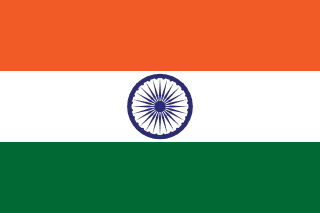
India occupies most of the Indian subcontinent in South Asia, bordered by Pakistan to the west, China, Nepal, and Bhutan to the north, and Bangladesh and Myanmar to the east, with coastlines on the Arabian Sea and the Bay of Bengal.
India takes its name from the Indus River, transmitted through Persian and Greek intermediaries in antiquity. The country's own constitution also recognises the name Bharat, drawn from ancient Sanskrit texts and a legendary king, and both names are officially valid under Indian law.
Landscape: Includes the Himalayas in the north, the Thar Desert in the west, the Ganges river plain, and tropical coastline in the south.
Climate: Dominated by the monsoon, hot summers followed by heavy seasonal rains, with huge regional variation from Himalayan cold to tropical heat.
Food: Extremely regional, but rice, lentils, and a wide range of spices form the backbone of most Indian cooking, alongside globally recognised dishes like biryani and dosa.
New Delhi became India's capital in 1911 under British colonial rule, replacing Calcutta, and was purpose-built as a planned administrative city adjacent to the much older city of Delhi, which had itself served as capital for various empires for centuries before that. With a population of over 30 million across the wider National Capital Region, it's one of the most populous urban areas on Earth.
The Bengal tiger is India's national animal, and the peacock its national bird, both chosen partly for their striking appearance and partly for deep roots in Indian art and mythology. The lotus is the national flower, holding particular significance in Hindu and Buddhist symbolism as representing purity rising out of murky water.
The sari remains one of the most widely worn traditional garments for women across the country, with regional weaving styles, Banarasi silk, Kanjeevaram, and many others, each carrying centuries of distinct technique. India also has an enormously rich handicraft tradition spanning textiles, metalwork, and pottery, much of it still produced by hand in specific regional centres today.
The Taj Mahal, a mausoleum built in the 17th century by Emperor Shah Jahan for his wife, is India's most internationally recognised landmark and a UNESCO World Heritage Site. India also holds ancient sites like the rock-cut caves of Ajanta and Ellora, and forts and palaces spanning multiple historic empires.
The Bengal tiger and Asian elephant are both found in India, alongside the Indian rhinoceros, concentrated largely in the northeastern state of Assam. The Gir Forest in Gujarat is the last remaining wild home of the Asiatic lion, found nowhere else on Earth.
India is religiously diverse, with a Hindu majority alongside large Muslim, Christian, Sikh, Buddhist, and Jain populations, making it home to more people practising more distinct major world religions than almost any other country. It's also home to hundreds of languages and thousands of distinct ethnic and regional cultural communities.
India is a major exporter of pharmaceuticals, textiles, gems and jewellery, and information technology services, and has become one of the world's largest hubs for software and IT outsourcing over the past few decades.
Diwali, the festival of lights, is India's most widely celebrated holiday, observed by Hindus, Sikhs, and Jains alike with oil lamps, fireworks, and sweets, typically falling in October or November depending on the lunar calendar. Republic Day on January 26th marks the 1950 adoption of India's constitution, marked by a major military and cultural parade in New Delhi, and Holi, the festival of colours in early spring, has become internationally recognised for its exuberant use of coloured powder.
Cricket is by far India's most popular sport, treated with something close to religious devotion in much of the country, and the Indian Premier League has grown into one of the most valuable sporting leagues in the world by broadcast revenue. Field hockey holds historic significance too, India having dominated the sport at the Olympics for much of the mid-20th century.
India is the world's largest democracy by population, a federal parliamentary republic with a President serving as ceremonial head of state and a Prime Minister holding real executive power, accountable to the Lok Sabha, the lower house of parliament. Indian elections are logistically enormous, involving hundreds of millions of voters across a multi-phase process that can take several weeks to complete.
Kangchenjunga, on the border with Nepal, is India's highest point at 8,586 metres, the third-highest mountain in the world, and considered sacred by local communities who traditionally don't climb all the way to its true summit out of respect. The lowest point sits at sea level along India's extensive coastline.
Niger's flag uses the same saffron-white-green horizontal layout as India, though with a plain orange disc rather than India's detailed navy Ashoka Chakra wheel at the centre, making the two genuinely similar from a distance despite the different central symbol. Ireland's flag uses the same colours again in a completely different vertical arrangement, different enough in layout that confusion is unlikely even with the shared palette.
Designed by Pingali Venkayya.
Adopted in 1947 just before independence, based on an earlier design by Pingali Venkayya, with the central spinning wheel later replaced by the Ashoka Chakra.
Home to the Taj Mahal and one of the highest UNESCO World Heritage Site counts in Asia, despite covering only 2.4% of Earth's land.
Play today's Flagpie →© Flagpie 2026