
Europe
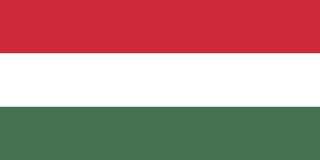
Hungary is a landlocked country in Central Europe, bordered by Austria and Slovakia to the northwest, Ukraine and Romania to the east, and Serbia and Croatia to the south.
Hungary's name in English likely comes from 'Onogur,' a Turkic tribal confederation name later associated with the Magyars, the people who settled the region, though Hungarians themselves call their country Magyarország, meaning 'land of the Magyars.'
Landscape: Mostly flat, dominated by the Great Hungarian Plain, with the Danube river running through the centre of the country.
Climate: Temperate continental, warm summers and cold winters.
Food: Goulash, a paprika-spiced meat stew, is the best known Hungarian dish, alongside a strong tradition of stuffed peppers and chimney cake.
Budapest was formed in 1873 by merging three separate cities, Buda and Óbuda on the west bank of the Danube with Pest on the east bank. With a population of around 1.7 million, it's known for its thermal spa culture, sitting atop more than 100 natural hot springs, a legacy of Ottoman-era bathhouses still in use today.
The turul, a mythical falcon-like bird from ancient Hungarian mythology, is a powerful national symbol tied to the country's founding legends. The tulip, though more associated internationally with the Netherlands, also holds folk symbolism in traditional Hungarian embroidery and design.
Hungarian folk embroidery, particularly from the Kalocsa and Matyó regions, is known for its bold floral patterns, and Herend porcelain, produced since the early 19th century, remains a respected fine craft export.
The Hungarian Parliament Building in Budapest, completed in 1904, is one of the largest legislative buildings in the world, and Buda Castle, overlooking the Danube, has served as a royal residence since the 13th century.
Hungary's Hortobágy National Park, part of the Great Hungarian Plain, protects one of the largest areas of natural grassland remaining in Europe, home to significant bird populations including the great bustard, one of the heaviest flying birds in the world.
Hungary is historically Roman Catholic with a significant Protestant, particularly Calvinist, minority, and Hungarian, or Magyar, ethnic and linguistic identity remains a strong unifying element of national culture, distinct from neighbouring Slavic and Germanic populations.
Hungary is a significant exporter of cars and automotive parts, machinery, and electronics, with a manufacturing sector closely tied to the wider Central European and German supply chain.
Saint Stephen's Day on August 20th honours Hungary's first king and patron saint, credited with founding the Hungarian state around the year 1000, and is celebrated with a major fireworks display over the Danube in Budapest. Revolution Day on March 15th commemorates the 1848 revolution against Habsburg rule, and Republic Day on October 23rd marks both the 1956 uprising against Soviet control and the 1989 declaration of the Third Hungarian Republic, two significant events sharing the same date. Busójárás in the town of Mohács, involving elaborate carved masks meant to scare away winter, is recognised by UNESCO as significant intangible cultural heritage.
Water polo holds a genuinely unique place in Hungarian sporting culture, the national team having dominated the sport at the Olympic level for the better part of a century, treated with a level of passion that rivals football in the country. Football, fencing, and swimming have also all produced numerous Hungarian Olympic champions across the decades.
Hungary is a parliamentary republic, with a largely ceremonial President as head of state and a Prime Minister holding real executive power, accountable to a single-chamber National Assembly. The country's modern democratic constitution followed the collapse of communist rule in 1989, and Hungary joined both NATO and the European Union in the years that followed.
Kékes, in the Mátra mountains, is Hungary's highest point at 1,014 metres, modest reflecting the country's largely flat Great Hungarian Plain geography. The lowest point is near Szeged in the south, sitting around 78 metres above sea level, still Hungary's lowest point despite being well above true sea level, since the country is entirely landlocked.
Italy, Bulgaria, and Mexico all use red, white, and green together too, though in different orders and arrangements, Italy's is vertical, Bulgaria's swaps green for the top stripe, Mexico adds a central emblem, making Hungary's specific horizontal red-white-green order distinct enough from each individually, even while sitting within that same broader colour family.
The red-white-green tricolour dates to the 1848 revolution against Habsburg rule, formally adopted as the national flag in 1957.
Its capital, Budapest, has more than 100 natural thermal springs, earning it the nickname 'City of Spas.'
Play today's Flagpie →© Flagpie 2026