
North America
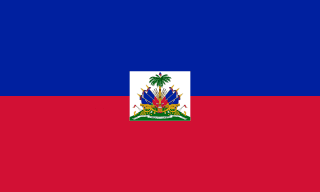
Haiti occupies the western third of the island of Hispaniola in the Caribbean, sharing its only land border with the Dominican Republic to the east.
Haiti's name comes from the Taíno word 'Ayiti,' meaning 'land of high mountains,' the original Indigenous name for the island before Spanish colonisation, later readopted upon Haitian independence in 1804.
Landscape: Mostly mountainous, sharing the island of Hispaniola with the Dominican Republic, with limited flat, arable land.
Climate: Tropical, hot and humid with a wet season and significant hurricane risk.
Food: Griot, fried marinated pork, is widely considered the national dish, typically served with rice and pikliz, a spicy pickled slaw.
Port-au-Prince was founded by French colonists in 1749 and became capital of independent Haiti in 1804, when the country became the first nation in the world founded through a successful slave revolt. With a population of around 1 million in the city itself, it remains the country's political and economic centre despite having faced severe challenges from earthquakes, most devastatingly in 2010, and ongoing instability.
The Hispaniolan trogon, a colourful bird found on the island Haiti shares with the Dominican Republic, is the national bird, and the royal palm appears on Haiti's coat of arms alongside a cannon and cap of liberty, symbols of the revolution that founded the country.
Haitian metalwork, particularly cut-steel drum sculpture from the town of Croix-des-Bouquets, has become internationally recognised, and Haitian painting, especially the vivid, self-taught 'naive' art style, has produced globally significant artists despite the country's limited formal art infrastructure.
The Citadelle Laferrière, a massive mountaintop fortress built in the early 19th century to defend against potential French reinvasion, is a UNESCO World Heritage Site and the largest fortress in the Americas.
Haiti's remaining forest cover, significantly reduced over centuries of deforestation, still supports the Hispaniolan solenodon, an unusual venomous mammal found only on the island shared with the Dominican Republic.
Haiti is majority Roman Catholic, with Vodou also widely practised, often alongside Catholicism rather than separately, reflecting the blending of West African spiritual traditions brought by enslaved people with the Catholicism imposed under French colonial rule.
Haiti's economy relies significantly on garment manufacturing and agricultural products including mangoes and coffee, alongside substantial remittances from Haitians living abroad, given the country's ongoing economic and political challenges.
Independence Day on January 1st marks 1804, when Haiti became the first nation in the world founded through a successful slave revolt, a date of profound historical significance well beyond Haiti's own borders. Ancestors' Day on January 2nd, observed the day after, honours those who fought in the revolution, together forming Haiti's most significant national celebration. Haiti's Flag Day in May celebrates the national flag's creation during the revolutionary war.
Football holds the largest domestic following in Haiti by a wide margin, and the country's participation in the 1974 World Cup remains a significant point of national sporting pride, one of the earliest Caribbean nations to qualify for the tournament. Haitian athletics has produced regional competitors within the wider Caribbean sporting community.
Haiti's political situation has been severely unstable in recent years, with the country lacking a fully functioning elected government following the 2021 assassination of its President, and large parts of the capital, Port-au-Prince, effectively controlled by armed gangs rather than state authorities, making Haiti's current governance genuinely difficult to describe with confidence. Haiti's history as the only nation founded through a successful slave revolt remains a source of deep national and diasporic pride.
Pic la Selle is Haiti's highest point at 2,680 metres. The lowest point sits at sea level along Haiti's coastline, sharing the island of Hispaniola with the Dominican Republic. Haiti's mountainous terrain, sharing Hispaniola with the Dominican Republic, has historically limited agricultural land availability.
The Dominican Republic's flag, sharing the island of Hispaniola with Haiti, uses the same blue-and-red palette, though arranged as a white cross dividing four quadrants rather than Haiti's horizontal stripes, different enough in structure that the two aren't especially likely confused despite the shared colours and shared island. Haiti's coat of arms, featuring a liberty cap, is a detail unique among all Caribbean nations' flags.
Adopted in 1803, created by removing the white stripe from the French tricolour, a deliberate rejection of French colonial rule during the Haitian Revolution.
In 1804, became the first country in the world to be founded by a successful slave revolt.
Play today's Flagpie →© Flagpie 2026