
North America
Grenada is a small island country at the southern end of the Caribbean's Windward Islands, north of Trinidad and Tobago and south of Saint Vincent and the Grenadines.
Grenada's name likely comes from the Spanish city of Granada, given by early Spanish explorers, though the island was later more heavily colonised and shaped by the French and British in subsequent centuries.
Landscape: A volcanic island with a mountainous, forested interior surrounded by beaches, plus several smaller islands.
Climate: Tropical, warm year-round with a wet season and hurricane risk, though slightly south of the main hurricane belt.
Food: Oil down, a one-pot dish of breadfruit, meat, and vegetables cooked in coconut milk, is considered the national dish.
St. George's has served as Grenada's capital since French colonial times, its natural horseshoe-shaped harbour considered one of the most picturesque in the Caribbean. With a population of around 33,000, it remains a compact but significant regional port town.
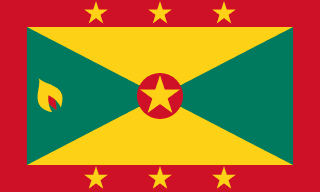
The Grenada dove, critically endangered and found only on the island, is the national bird, and nutmeg, which the country is famous for producing, is so central to national identity that it appears on Grenada's flag.
Grenadian spice craft, including decorative nutmeg and spice baskets sold to visitors, reflects the island's identity as the 'Isle of Spice,' and traditional Grenadian pottery and boat-building remain practised in some coastal communities. Traditional Grenadian steelpan and calypso music, shared culturally with wider Caribbean traditions, remain performed at the island's annual carnival.
The underwater sculpture park near St. George's, one of the first of its kind in the world, and Grand Etang National Park, centred on a crater lake, are among Grenada's most distinctive landmarks.
The Grenada dove survives only in a small area of dry forest on the island, and Grenada's surrounding waters support significant coral reef and sea turtle populations.
Grenada is majority Christian, predominantly Roman Catholic and Anglican, reflecting its shared French and British colonial history, and the island's culture carries strong African, French, and British influences woven together. Grenada's population reflects a significant history of both French and British colonial rule, evident in surviving place names and architectural influences across the island.
Grenada is one of the world's largest producers of nutmeg and mace, historically earning it the nickname 'Isle of Spice,' alongside cocoa as a significant export crop.
Independence Day on February 7th marks 1974, when Grenada gained sovereignty from British colonial rule. Given Grenada's significant Catholic and Anglican population, Christmas and Easter are both widely observed, and Carnival, held in August rather than the more typical pre-Lent timing found elsewhere in the Caribbean, remains the country's most significant cultural celebration. Grenada's Thanksgiving Day in October marks the anniversary of the 1983 intervention that restored constitutional government.
Cricket and athletics both hold significant followings in Grenada, the island having produced an Olympic gold medallist in the 400 metres at the 2012 London Games, Grenada's first ever Olympic medal, a landmark achievement for the small nation. Football also draws a significant domestic following. Grenadian netball has also grown in domestic popularity among the island's youth.
Grenada is a parliamentary constitutional monarchy, with the British monarch as ceremonial head of state represented domestically by a Governor-General, while a Prime Minister holds real executive power accountable to a bicameral parliament. The country experienced a brief but significant 1983 US-led military intervention following a violent internal political crisis, an event that remains a notable part of Grenada's modern history. Grenada's nutmeg industry, though smaller since a devastating 2004 hurricane, remains significant to national identity. Grenada's economy has diversified increasingly toward tourism alongside its traditional spice exports.
Mount Saint Catherine is Grenada's highest point at 840 metres. The lowest point sits at sea level around the island's coastline. Grenada's volcanic terrain, though smaller than some Caribbean neighbours, still produces a notably rugged interior.
There's no especially close match for Grenada's flag, the red border framing yellow and green triangles with a nutmeg pod in the hoist and a central star-studded disc is a distinctive combination, that nutmeg symbol specifically referencing Grenada's nickname, the 'Isle of Spice.' Grenada's nutmeg symbol is unique among Caribbean flags, directly referencing the island's signature export.
Designed by Anthony Caesar Mark Marryshow.
Adopted in 1974 at independence, featuring a nutmeg pod, a nod to the country's status as one of the world's largest nutmeg producers.
Known as the 'Island of Spice,' producing a large share of the world's nutmeg.
Play today's Flagpie →© Flagpie 2026