
Europe
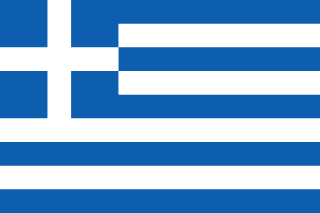
Greece sits at the southern tip of the Balkan Peninsula, bordered by Albania, North Macedonia, and Bulgaria to the north and Turkey to the east, surrounded by the Aegean, Ionian, and Mediterranean Seas and thousands of islands.
The English name Greece comes from the Latin 'Graecia,' which the Romans used for the region, while Greeks themselves call their country Hellas, a name with roots going back to ancient Greek mythology and used continuously since antiquity.
Landscape: Mountainous, with thousands of islands scattered across the Aegean and Ionian Seas, and a long, deeply indented coastline.
Climate: Mediterranean, hot dry summers and mild wet winters along the coast, colder in the mountainous interior.
Food: Moussaka, souvlaki, and a Greek salad built on olive oil and feta cheese are among the country's best known dishes.
Athens has been continuously inhabited for over 3,000 years and became capital of the modern Greek state in 1834, shortly after independence from Ottoman rule. With a population of around 3.1 million across the greater metropolitan area, it remains defined as much by its ancient ruins, still standing at the centre of the modern city, as by its role as a contemporary capital.
The phoenix, a mythical bird reborn from its own ashes, became a powerful symbol of modern Greek identity after independence from Ottoman rule, representing national rebirth. The olive tree, deeply tied to ancient Greek mythology and the story of Athens' founding, remains a significant symbol of peace and prosperity.
Greek pottery techniques trace back to some of the most significant ceramic traditions in the ancient world, and traditional Greek weaving and embroidery, particularly from the islands, remains an actively practised craft. Greek Orthodox icon painting is another long-standing artistic and religious tradition.
The Acropolis of Athens, home to the Parthenon, was built in the 5th century BC and remains one of the most significant surviving structures from the ancient world. Delphi, once considered the centre of the world in ancient Greek belief, and the island of Santorini are both among Greece's most visited sites.
The Mediterranean monk seal, one of the most endangered seal species in the world, breeds along parts of the Greek coastline. Greece's mountainous mainland also supports brown bears and wolves in its more remote northern regions.
Greece is overwhelmingly Greek Orthodox Christian, with the Church holding a historically close relationship to Greek national identity, particularly through its role during centuries of Ottoman rule when it helped preserve Greek language and culture.
Greece is a significant exporter of refined petroleum products, aluminium, and agricultural goods including olive oil, and shipping forms an especially large part of the Greek economy, with Greek-owned vessels making up one of the largest merchant fleets in the world.
Independence Day on March 25th marks the start of the 1821 War of Independence against Ottoman rule, and Greek Orthodox Easter, calculated on a different calendar to Western Easter and often falling on a different date, is the country's most significant religious holiday, more culturally central than Christmas. Ohi Day on October 28th commemorates Greece's 1940 refusal to allow Axis forces passage through the country, a single defiant word, 'no,' that gives the day its name.
Football holds the largest following in Greece, the national team's shock victory at Euro 2004 remaining one of the most celebrated underdog stories in the tournament's history, and basketball also carries major national pride, Greece having produced some of the modern NBA's most dominant players. Greece is additionally the birthplace of the Olympic Games themselves, hosting the first modern Olympics in 1896 and later the 2004 Summer Games in Athens.
Greece is a parliamentary republic, with a largely ceremonial President as head of state and a Prime Minister holding real executive power, accountable to a single-chamber parliament. The country's modern democracy was restored in 1974 following the fall of a military junta that had ruled since 1967, and Greece has since become a founding-era member of the European Union's eurozone.
Mount Olympus, home to the twelve gods of ancient Greek mythology, is the country's highest point at 2,918 metres, its dramatic peaks giving genuine credibility to why ancient Greeks imagined it as home to the divine. The lowest point sits at sea level along Greece's extraordinarily long and indented coastline.
Uruguay's flag shares Greece's exact blue-and-white palette and even a similar striped structure, though Uruguay adds a golden sun emblem that Greece's flag doesn't have, and Greece's cross-and-stripes layout is distinctive enough that the two aren't often mixed up in practice. Finland and Israel both use blue and white as their only two colours too, though in completely different layouts, a cross for Finland and stars for Israel, different enough from Greece's specific stripe count and cross-in-canton design to avoid real confusion.
Adopted in 1822 during the Greek War of Independence from the Ottoman Empire, with the exact number of stripes standardised at nine in 1978.
Has the longest coastline in the Mediterranean, made up largely of more than 6,000 islands.
Play today's Flagpie →© Flagpie 2026