
Europe
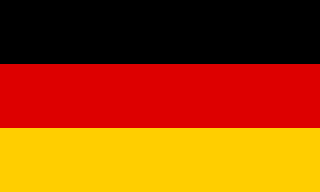
Germany sits at the heart of Central Europe, bordering nine countries in total, including France, Poland, Austria, and the Netherlands, with coastlines on the North Sea and Baltic Sea to the north.
The English name 'Germany' comes from the Latin 'Germania,' used by Roman writers for the region east of the Rhine, though the exact origin of that Latin term is debated. Germans themselves call the country Deutschland, from an old word meaning 'of the people,' referring to the common language shared across many small Germanic states long before unification.
Landscape: Low-lying coastal plains in the north, central uplands, and the Alps along the southern border with Austria.
Climate: Temperate, with warm summers and cold winters, growing milder in the west due to Atlantic influence.
Food: Bread, sausage, and potatoes form the backbone of traditional German cooking, with huge regional variation in sausage styles alone.
Berlin became the capital of a unified Germany in 1871, though it had already been the capital of Prussia for centuries before that. Divided between East and West during the Cold War, with the Berlin Wall physically splitting the city from 1961 to 1989, it was reinstated as capital of the reunified country in 1990. Home to around 3.7 million people, it's known for its layered, often difficult 20th-century history as much as for its current status as a cultural and start-up hub.
The federal eagle, a black eagle with outstretched wings, has represented German states in various forms since the Holy Roman Empire and remains the country's official coat of arms today. The oak leaf is a widely recognised unofficial national symbol, appearing on German coins and military decorations for centuries.
Traditional Bavarian dress, lederhosen for men and dirndl dresses for women, remains genuinely worn at regional festivals like Oktoberfest, rather than existing purely as costume. Germany also has strong traditions in precision craftsmanship, particularly clockmaking in the Black Forest and glassmaking traditions dating back centuries.
Neuschwanstein Castle, built in the 19th century and the direct inspiration for Disney's Sleeping Beauty Castle, is one of Germany's most visited sites, alongside the Brandenburg Gate in Berlin and Cologne Cathedral, which took over 600 years to complete.
The European wildcat and red deer are among Germany's most notable native mammals, found particularly in the country's larger forested regions like the Black Forest. Wolves, once hunted to extinction domestically, have naturally recolonised parts of eastern Germany in recent decades.
Germany is roughly split between Catholic and Protestant Christian traditions, with the divide tracing back to the Reformation, which began there in the 16th century under Martin Luther. A large and growing share of the population identifies with no religion, and Germany is also home to one of Europe's largest Muslim communities.
Germany is one of the world's largest exporters of cars and automotive parts, machinery, and chemicals, and its manufacturing sector, particularly companies like Volkswagen, BMW, and Mercedes-Benz, forms a central part of the national economy.
German Unity Day on October 3rd marks the 1990 reunification of East and West Germany, and is the country's principal national holiday, relatively young by European standards given the country's complicated 20th-century political history. Oktoberfest, despite its name, largely runs through late September, and while it's a Bavarian regional festival rather than a formal national holiday, it's become one of Germany's most internationally recognised cultural events.
Football is overwhelmingly Germany's most popular sport, with the national team having won the World Cup four times, and the Bundesliga regularly drawing some of the highest average attendances of any football league in the world. Germany has also historically been a strong Winter Olympics competitor, particularly in bobsledding and speed skating.
Germany is a federal parliamentary republic, with a largely ceremonial President as head of state and real executive power held by the Chancellor, elected by the Bundestag, the lower house of parliament. The country's 16 states retain significant independent authority, a deliberate structural choice made after the Second World War to prevent power from concentrating too heavily at the federal level again.
The Zugspitze, on the border with Austria, is Germany's highest point at 2,962 metres, and remains snow-covered for much of the year, home to one of the country's few glaciers. The lowest point is a reclaimed marshland area near Neuendorf-Sachsenbande in the north, sitting a few metres below sea level.
Belgium's flag uses the exact same three colours, black, gold (yellow), and red, though arranged as vertical stripes rather than Germany's horizontal ones, making the two easy to mix up if you're only half paying attention. There isn't a strong third match, most other flags using this particular colour trio use it in genuinely different proportions or add a fourth colour, which is enough to set them apart on sight.
The black-red-gold combination dates back to volunteer corps uniforms from the Napoleonic Wars, was the flag of the short-lived Weimar Republic, was replaced under Nazi rule, and was restored as the flag of West Germany in 1949, later becoming the flag of the reunified country.
Home to one of the highest concentrations of UNESCO World Heritage Sites in the world.
Play today's Flagpie →© Flagpie 2026