
Europe
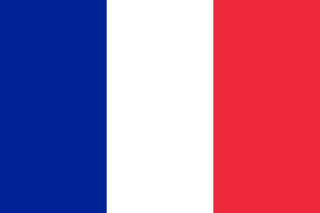
France sits in Western Europe, bordered by Belgium, Luxembourg, and Germany to the northeast, Switzerland and Italy to the east, and Spain to the south, with coastlines on the Atlantic Ocean, the English Channel, and the Mediterranean Sea.
France takes its name from the Franks, a Germanic people who settled the region and established the Frankish kingdom after the fall of the Western Roman Empire. The name itself is generally traced to a Germanic word meaning 'free' or 'fierce,' referring to the Franks themselves rather than the land.
Landscape: Ranges from Atlantic and Mediterranean coastline to the Alps and Pyrenees mountains, with large fertile plains across the centre and north.
Climate: Mostly temperate, with a Mediterranean climate in the south and alpine conditions in mountainous regions.
Food: Cheese, wine, and bread are the everyday staples behind France's global culinary reputation, alongside dishes like coq au vin and croissants.
Paris has served as France's capital in some form since the Middle Ages, growing from a settlement on the Île de la Cité into the seat of the French monarchy and later the Republic. Home to roughly 2.1 million people within the city itself and well over 10 million across the wider region, it became the country's political and cultural centre of gravity partly through royal patronage and partly through the sheer weight of institutions, universities, courts, and commerce, that accumulated there over centuries.
The Gallic rooster is France's best-known unofficial symbol, its origin is a Latin pun, since the word 'gallus' meant both 'rooster' and 'inhabitant of Gaul,' and it became a genuine national emblem during the Revolution. Marianne, a female figure wearing a Phrygian cap, personifies the French Republic itself and its values of liberty, equality, and fraternity. The fleur-de-lis, a stylised lily, was the symbol of the French monarchy for centuries before the Revolution and still appears in French heraldry today.
French fashion and haute couture carry an outsized global reputation, with Paris functioning as one of the world's fashion capitals since the 19th century. Regional French crafts include Limoges porcelain, Lyon silk weaving, and a long-standing tradition of cheese and wine-making so tied to specific regions that many are protected by law based on where they're produced.
The Eiffel Tower, built for the 1889 World's Fair, is France's most recognisable landmark, alongside the Palace of Versailles, the former royal residence, and Notre-Dame Cathedral in Paris. France holds more UNESCO World Heritage Sites than almost any other country, including the prehistoric cave paintings at Lascaux and the fortified city of Carcassonne.
The Alpine ibex, a wild goat with distinctive curved horns, lives in the mountainous regions bordering Switzerland and Italy. France's Mediterranean and Atlantic coastlines also support significant seabird colonies, and its overseas territories, from French Guiana to New Caledonia, add considerable biodiversity well beyond mainland Europe.
France is officially a secular state under a principle called laïcité, which keeps religion formally separate from government and public institutions. Historically the population has been majority Roman Catholic, though religious observance has declined significantly, and France is also home to sizeable Muslim and Jewish communities, among the largest of each in Europe.
France is a major exporter of aircraft and aerospace equipment, luxury goods and fashion, wine, and pharmaceuticals, and remains one of the world's most visited countries for tourism, which functions as a major economic export in its own right.
Bastille Day on July 14th marks the 1789 storming of the Bastille prison, a pivotal moment in the French Revolution, and is celebrated with a major military parade down the Champs-Élysées in Paris alongside fireworks and public festivities nationwide. Armistice Day on November 11th commemorates the end of the First World War, and Labour Day on May 1st is marked by the giving of lily of the valley flowers, a tradition dating back to the early 20th century.
Football holds the top spot in French sporting culture, with the country having won the World Cup twice, but cycling carries a unique cultural weight through the Tour de France, first held in 1903 and now the most prestigious race in the sport worldwide. Rugby also holds deep regional significance, particularly in the country's south.
France is a semi-presidential republic, splitting executive power between a directly elected President and a Prime Minister who's typically drawn from and answerable to Parliament. This dual-executive structure, established under the Fifth Republic's 1958 constitution, is relatively unusual, giving France a system that blends presidential and parliamentary elements more than most other democracies.
Mont Blanc, sitting on the border with Italy, is France's highest point at 4,809 metres and the tallest peak in the Alps, drawing mountaineers from around the world since the first recorded ascent in 1786. The lowest point in mainland France is a shallow depression near the Rhône delta, sitting just a couple of metres below sea level.
The Netherlands and Luxembourg both use red, white and blue too, though arranged horizontally rather than in France's vertical stripes, and Luxembourg's blue in particular is a noticeably lighter shade, chosen specifically to distinguish it from the Dutch flag it otherwise closely resembles. France's own vertical blue-white-red arrangement is closely mirrored by several countries that deliberately adopted the tricolour format as a nod to French revolutionary influence, though usually in different colours entirely, making the layout familiar even where the actual palette isn't.
Adopted in 1794 during the French Revolution, based on the cockade colours worn by revolutionaries, and hasn't fundamentally changed since, though the exact shades were only formally standardised in 1976.
One of the most visited countries on Earth, with dozens of UNESCO World Heritage Sites including Notre-Dame and Versailles.
Play today's Flagpie →© Flagpie 2026