
Europe
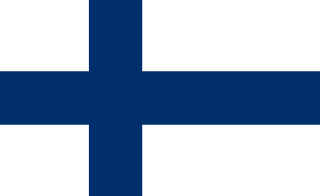
Finland sits in Northern Europe, bordered by Sweden to the northwest, Norway to the north, and Russia to the east, with a long coastline on the Gulf of Finland and the Baltic Sea's Gulf of Bothnia.
Finland's name likely comes from an old Germanic word referring to the Finnish people, though the Finns themselves call their country Suomi, a name whose exact origin remains genuinely uncertain, with theories linking it to words for land, marsh, or fish.
Landscape: Heavily forested and dotted with roughly 188,000 lakes, mostly flat with low hills, and Arctic terrain in the far north.
Climate: Cold temperate to subarctic, with long, dark winters and correspondingly long daylight in summer, especially in the north.
Food: Rye bread and a wide variety of berries and fish, particularly salmon and herring, are central to traditional Finnish cooking.
Helsinki was founded in 1550 by King Gustav I of Sweden, originally intended to compete with the Estonian city of Tallinn for Baltic trade, though it only became Finland's capital in 1812, after the country passed from Swedish to Russian control. With a population of around 675,000, it remains Finland's dominant city and centre of government.
The whooper swan is Finland's national bird, and the lily of the valley its national flower, both tied to Finnish folklore and widely found across the country's forests and lakes. The brown bear holds deep cultural significance in traditional Finnish belief, once considered a sacred animal.
The sauna is arguably Finland's most significant cultural institution and export, with an estimated one sauna for every couple of residents nationwide, an everyday practice rather than an occasional luxury. Finnish design, particularly in glassware and textiles from companies like Iittala and Marimekko, carries a strong international reputation.
Suomenlinna, a sea fortress built across several islands off Helsinki in the 18th century, is a UNESCO World Heritage Site, and Finland's Lakeland region, with its roughly 188,000 lakes, defines much of the country's landscape and tourism.
The Saimaa ringed seal, found only in Finland's Lake Saimaa, is one of the most endangered seal species in the world, isolated from the sea for thousands of years since the last ice age. Finland's forests also support brown bears, wolves, and lynx.
Finland is historically Lutheran, with the Evangelical Lutheran Church of Finland remaining the largest religious body, though a growing share of the population identifies with no religion. The Sámi people represent Finland's Indigenous population in the country's far north.
Finland is a significant exporter of paper and timber products, machinery, and electronics, and historically was home to Nokia, once the world's largest mobile phone manufacturer.
Independence Day on December 6th marks 1917, when Finland declared independence from Russia, marked by a solemn torchlight procession and a formal presidential reception broadcast nationwide, a notably restrained tone compared to many countries' independence celebrations. Midsummer, or Juhannus, is arguably more culturally central than Christmas, with much of the country decamping to lakeside cottages for the long daylight of the solstice. Vappu on May Day combines a workers' rights celebration with a lighthearted student and graduate tradition, marked by white student caps worn nationwide.
Ice hockey holds a place close to the centre of Finnish national identity, the country's 1995 and subsequent World Championship wins treated as genuine national moments, and Finland has also produced disproportionately successful competitors in motorsport, particularly rallying and Formula One, relative to its small population.
Finland is a parliamentary republic, with a directly elected President handling foreign policy alongside a Prime Minister who holds most day-to-day domestic executive power, accountable to the Eduskunta, Finland's single-chamber parliament. The country joined NATO in 2023, a significant shift from its long-standing policy of military non-alignment during the Cold War era. Finland's political system is known for consensus-driven, multi-party coalition governments, reflecting its proportional representation electoral structure.
Halti, on the border with Norway in Finland's far north, is the country's highest point at 1,324 metres. The lowest point is a small area near the Baltic coast sitting just below sea level, in keeping with Finland's generally low, lake-dotted geography.
Sweden's flag is Finland's closest match, both use a blue Nordic cross on a light background, differing mainly in shade, Finland's blue is noticeably darker, and Sweden adds yellow to its cross that Finland's flag doesn't carry. Iceland, Norway, and Denmark all share the same underlying cross layout too, distinguished from Finland's simpler two-colour design by their additional third colour.
Adopted in 1918, shortly after Finland gained independence from Russia, chosen from several competing designs submitted around the time of independence.
Sometimes called the 'Land of a Thousand Lakes,' though the real number is closer to 180,000.
Play today's Flagpie →© Flagpie 2026