
North America
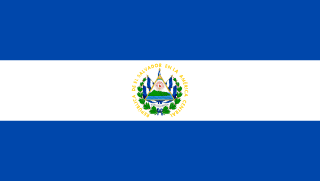
El Salvador is the smallest country in Central America, sitting on the Pacific coast between Guatemala to the northwest and Honduras to the northeast. Its name means 'The Saviour' in Spanish.
El Salvador's name means 'The Saviour' in Spanish, a reference to Jesus Christ, given by Spanish colonisers when the territory was first settled in the 16th century.
Landscape: The smallest and most densely populated country in Central America, mountainous and volcanic with a Pacific coastline.
Climate: Tropical, with a wet and dry season, cooler in the highland areas.
Food: Pupusas, thick corn tortillas stuffed with cheese, beans, or meat, are the national dish and a genuine everyday staple.
San Salvador was founded by the Spanish in 1525 and has served as El Salvador's capital since, despite being significantly damaged by earthquakes on multiple occasions given the country's position along a major fault line. With a population of around 1.7 million across the metropolitan area, it remains Central America's most densely populated capital region.
The turquoise-browed motmot, shared symbolically with Nicaragua, is El Salvador's national bird, and the izote flower, whose petals are also used in local cuisine, is the national flower.
Salvadoran textile weaving and traditional pottery from the town of Ilobasco, known for its miniature clay figurines, remain significant local craft industries. Traditional Salvadoran hammock weaving, particularly from the town of Concepción Quezaltepeque, remains a genuinely significant local export craft.
The Maya ruins of Joya de Cerén, sometimes called the 'Pompeii of the Americas' after being preserved by volcanic ash around 600 AD, is a UNESCO World Heritage Site offering an unusually detailed look at ordinary ancient Maya daily life.
El Salvador's smaller size and dense population have significantly reduced its forest cover compared to neighbouring countries, though remaining protected areas like Montecristo National Park support cloud forest habitat shared with Guatemala and Honduras. El Salvador's Pacific coastline is a significant nesting site for several sea turtle species, including the olive ridley.
El Salvador is majority Christian, split between Catholic and growing evangelical Protestant traditions, and the country's population is predominantly Mestizo, reflecting a mix of Indigenous and Spanish heritage.
El Salvador is a significant exporter of textiles and coffee, and became the first country in the world to adopt Bitcoin as legal tender in 2021, a notable and closely watched economic experiment.
Independence Day on September 15th, shared with the rest of Central America, marks 1821, celebrated with student parades and torch relays nationwide. Given El Salvador's significant Catholic population, Semana Santa (Holy Week) before Easter is marked by elaborate processions, including intricate sawdust carpets laid across streets in some towns. El Salvador's August Festival in San Salvador honours the country's patron saint with week-long celebrations.
Football holds the largest domestic following in El Salvador by a wide margin, the country's qualification for consecutive World Cups in 1970 and 1982 remaining a significant point of national sporting pride despite the team's more recent struggles to replicate that success. Salvadoran athletics has grown through increased Central American regional competition.
El Salvador is a presidential republic, with a President serving as both head of state and government. The country experienced a brutal civil war from 1979 to 1992, and more recently has pursued an aggressive and internationally debated crackdown on gang violence under its current government, significantly reducing the country's homicide rate from among the highest in the world. El Salvador's adoption of Bitcoin as legal tender in 2021 made it the first country in the world to do so.
Cerro El Pital is El Salvador's highest point at 2,730 metres. The lowest point sits at sea level along El Salvador's Pacific coastline, the only Central American country without a Caribbean coastline. El Salvador's volcanic terrain, part of the wider Central American volcanic belt, shapes much of the country's agriculture and geography.
Nicaragua, Honduras, and Guatemala all use variations of the same blue-white-blue tricolour tracing back to the former United Provinces of Central America, and El Salvador's own detailed central coat of arms, featuring five volcanoes representing the five founding nations, is what most clearly distinguishes it from its regional neighbours' differently arranged versions.
Based on the flag of the United Provinces of Central America, adopted in its current form in 1912.
The smallest country in Central America by area, and the first in the world to adopt Bitcoin as legal tender.
Play today's Flagpie →© Flagpie 2026