
Africa
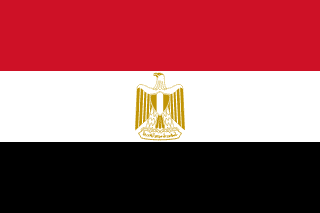
Egypt sits in the northeastern corner of Africa, bordered by Libya to the west, Sudan to the south, and Israel to the east, with the Mediterranean Sea to the north and the Red Sea to the east, and the Nile River running through its centre.
The English name Egypt comes from the ancient Greek 'Aigyptos,' itself likely derived from an ancient Egyptian phrase referring to the temple of the god Ptah at Memphis. Egyptians themselves have long called their country Misr, a name with Semitic roots used in Arabic to this day.
Landscape: Mostly desert, with nearly all of the population concentrated along the narrow, fertile Nile River valley and delta.
Climate: Desert climate, hot and dry through most of the year, with a mild winter.
Food: Koshari, a mix of rice, lentils, pasta and fried onions, is widely considered the national dish, alongside ful medames, a slow-cooked fava bean dish.
Cairo was founded in 969 AD by the Fatimid dynasty, though the wider area had already been significant for thousands of years due to its proximity to Memphis, ancient Egypt's earlier capital. With a population of over 10 million in the city itself, and more than 22 million across greater Cairo, it's the largest city in Africa and the Arab world.
The steppe eagle appears on Egypt's coat of arms as the Eagle of Saladin, a symbol of Arab nationalism with roots going back to the 12th-century sultan. The lotus flower held deep religious and symbolic significance in ancient Egyptian art and mythology, representing rebirth and the sun.
Egyptian cotton has an international reputation for quality, grown along the Nile for centuries, and Egyptian craftspeople have long traditions in metalwork, particularly copper and brass, alongside intricate woodwork inlaid with mother-of-pearl.
The Pyramids of Giza, built roughly 4,500 years ago, are the last surviving wonder of the ancient world and remain Egypt's most famous landmark, alongside the Sphinx and the Valley of the Kings, burial site of numerous pharaohs including Tutankhamun.
The Nile crocodile, once revered in ancient Egyptian religion, still inhabits parts of southern Egypt and Lake Nasser. Egypt's Red Sea coast supports extensive coral reefs and marine life, a significant draw for the country's diving tourism industry.
Egypt is majority Muslim, predominantly Sunni, with a significant Coptic Christian minority, one of the oldest Christian communities in the world, tracing its roots back to the early centuries of Christianity itself.
Egypt is a significant exporter of crude oil and petroleum products, textiles, and agricultural goods, and revenue from the Suez Canal, connecting the Mediterranean to the Red Sea, forms an important part of the national economy given its role in global shipping.
Revolution Day on July 23rd marks the 1952 revolution that ended the monarchy and established the modern republic, and remains Egypt's most significant political holiday. Eid al-Fitr and Eid al-Adha are both widely and enthusiastically observed given Egypt's overwhelmingly Muslim population, and Sham el-Nessim, a spring festival with roots stretching back to ancient Egyptian tradition, is celebrated by Muslims and Christians alike, a rare shared secular holiday.
Football is Egypt's dominant sport by a huge margin, the national team having won the Africa Cup of Nations a record seven times, and squash has become a genuine area of Egyptian excellence at the international level in recent decades, with Egyptian players regularly topping the world rankings. Egypt's ancient wrestling tradition, depicted in tomb paintings thousands of years old, is sometimes cited as among the oldest documented combat sports in human history.
Egypt is a presidential republic, with a President holding substantial executive power, elected for six-year terms. The country has experienced significant political upheaval in the 21st century, including the 2011 revolution that ended Hosni Mubarak's three-decade rule as part of the wider Arab Spring, followed by a further change of government in 2013.
Mount Catherine, in the Sinai Peninsula, is Egypt's highest point at 2,629 metres, near the site where, according to tradition, Moses received the Ten Commandments on the neighbouring Mount Sinai. The Qattara Depression in the country's northwest holds the lowest point at around 133 metres below sea level, one of the lowest points on the African continent.
Syria, Iraq, and Yemen all use variations of the same red-white-black horizontal Pan-Arab tricolour Egypt does, a shared design tradition tracing back to the 1916 Arab Revolt flag, and the countries are typically distinguished only by the number and arrangement of stars or, in Egypt's case, its central eagle emblem. Without that central symbol clearly visible, Egypt's flag can be genuinely difficult to distinguish at a glance from several of its regional neighbours.
The current design dates to 1984, the fourth version since the 1952 revolution, each iteration keeping the same red-white-black Pan-Arab base while changing the central emblem.
Home to the last surviving Wonder of the Ancient World, the Great Pyramid of Giza.
Play today's Flagpie →© Flagpie 2026