
North America
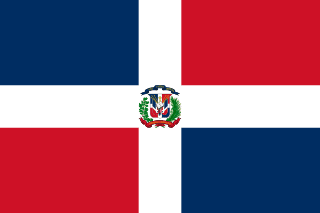
The Dominican Republic occupies the eastern two-thirds of the island of Hispaniola in the Caribbean, sharing its only land border with Haiti to the west.
The Dominican Republic's name comes from Santo Domingo, its capital, itself named after Saint Dominic, founder of the Dominican religious order, chosen by Spanish colonisers when the city was established.
Landscape: Mountainous, home to the highest peak in the Caribbean (Pico Duarte), sharing the island of Hispaniola with Haiti.
Climate: Tropical, warm year-round with a wet season and hurricane risk.
Food: La bandera, literally 'the flag,' a plate of rice, beans and stewed meat, is the everyday national meal.
Santo Domingo, founded in 1496, is the oldest continuously inhabited European-established city in the Americas, predating even the earliest English or French colonial settlements by over a century. With a population of around 1.1 million in the city itself, its historic colonial zone is a UNESCO World Heritage Site.
The palmchat, found only on the island of Hispaniola, is the Dominican Republic's national bird, and the Bayahíbe rose, native to the country, became the national flower in 2011 specifically to help raise conservation awareness for the species.
Larimar, a rare blue stone found only in the Dominican Republic, is used extensively in local jewellery-making, and traditional Dominican amber craft draws on some of the highest-quality amber deposits in the world. Traditional Dominican carnival mask-making, particularly the devil-inspired diablo cojuelo masks, remains an actively produced folk art tied to the country's February carnival celebrations.
The Colonial Zone of Santo Domingo contains the oldest cathedral, university, and hospital built by Europeans anywhere in the Americas, and the Basílica of Higüey is a major pilgrimage site for Dominican Catholics.
The Dominican Republic shares the island of Hispaniola with Haiti, and its Los Haitises National Park protects significant mangrove and limestone karst habitat, home to numerous bird species found only on the island. Humpback whales migrate to Samaná Bay each winter to breed, making it one of the best whale-watching destinations in the Caribbean.
The Dominican Republic is majority Roman Catholic, and the country's culture reflects a strong mix of Spanish, Taíno Indigenous, and African heritage, particularly visible in its music, including merengue and bachata, both of which originated there.
The Dominican Republic is a significant exporter of medical instruments, textiles, and tobacco products, alongside a major tourism industry that forms one of the largest parts of the national economy.
Independence Day on February 27th marks 1844, when the Dominican Republic separated from Haitian rule, celebrated nationwide with parades and the country's distinctive merengue music playing everywhere. Restoration Day on August 16th marks 1865, when the country regained sovereignty after a brief return to Spanish colonial rule, and Carnival, held throughout February, culminates around Independence Day with elaborate costumes and street parades in cities across the country.
Baseball is treated with genuine devotion in the Dominican Republic, the country having produced more Major League Baseball players per capita than almost anywhere else in the world, with the sport woven deeply into everyday community life from childhood. Boxing has also produced multiple Dominican world champions across several weight divisions.
The Dominican Republic is a presidential republic, with a President serving as both head of state and government, elected for a four-year term with the possibility of one re-election. The country shares the island of Hispaniola with Haiti, and the historically complicated relationship between the two nations, including periods of conflict and significant migration, remains a genuinely significant feature of Dominican politics today.
Pico Duarte, in the Cordillera Central, is the Dominican Republic's highest point at 3,098 metres, and holds the distinction of being the highest peak in the entire Caribbean. Lake Enriquillo, a saline lake, holds the lowest point at around 46 metres below sea level, sitting just 85 kilometres from Pico Duarte, a dramatic elevation range packed into a relatively small country.
Haiti's flag, sharing the island of Hispaniola with the Dominican Republic, uses the same blue-and-red palette, though arranged as horizontal stripes rather than the Dominican Republic's white cross dividing four quadrants, different enough in structure that the two aren't especially likely confused despite the shared colours and shared island. Chile and Panama both also use red, white, and blue with a central emblem, arranged differently enough from the Dominican Republic's distinctive cross layout to avoid real confusion.
Adopted in 1844 upon independence from Haiti, the only national flag in the world with a Bible depicted as part of its central coat of arms.
Home to Santo Domingo, the site of the first permanent European settlement anywhere in the Americas.
Play today's Flagpie →© Flagpie 2026