
North America
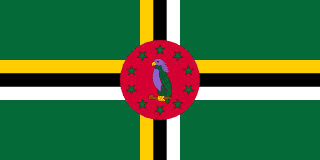
Dominica is a small island nation in the Caribbean's Lesser Antilles, sitting between the French territories of Guadeloupe to the north and Martinique to the south.
Dominica's name comes from the Latin word for Sunday, given by Christopher Columbus, who reportedly sighted the island on a Sunday in 1493 during his second voyage to the Americas.
Landscape: Mountainous and heavily forested volcanic island, with hot springs, waterfalls, and the world's second-largest boiling lake.
Climate: Tropical, warm year-round with heavy rainfall in the mountainous interior.
Food: Mountain chicken, actually a large frog species despite the name, was historically a national delicacy, though it's now protected due to population decline.
Roseau has served as Dominica's capital since French colonial times, its name meaning 'reeds' in French, referring to reeds that once grew along the nearby riverbank. With a population of around 15,000, it remains a small but significant Caribbean port town.
The Sisserou parrot, found only on Dominica and critically endangered, is the national bird and appears at the centre of the country's flag, one of the very few national flags in the world to feature purple as a colour.
Kalinago (Carib) basket weaving, using techniques passed down for centuries by the island's Indigenous community, one of the last remaining in the Caribbean, remains an actively practised and culturally significant craft. Traditional Dominican Creole cuisine and storytelling remain closely tied to the island's French colonial and Kalinago Indigenous heritage.
The Boiling Lake, the second-largest hot spring lake in the world, and Dominica's extensive rainforest, giving it the nickname 'Nature Isle of the Caribbean,' are among the country's most significant natural landmarks. Trafalgar Falls, twin waterfalls easily accessible near Roseau, are among the island's most visited natural sites.
The Sisserou parrot survives only in Dominica's mountainous rainforest interior, and the island's Boeri Lake and surrounding volcanic terrain support a range of species adapted to its still geologically active landscape. Dominica's whale-watching waters are considered among the best in the Caribbean, with sperm whales resident in the surrounding sea year-round.
Dominica is majority Roman Catholic, and the island retains one of the last surviving Kalinago (Carib) Indigenous communities in the Caribbean, with a designated territory preserving distinct cultural and political identity.
Dominica's economy relies significantly on agriculture, particularly bananas, alongside a growing citizenship-by-investment programme that has become a notable source of government revenue in recent years.
Independence Day on November 3rd marks 1978, when Dominica gained sovereignty from British colonial rule, celebrated alongside Community Day the following day, together forming the country's most significant annual celebration period. Creole Day in late October, part of a wider month-long celebration of Dominica's French Creole heritage, involves traditional dress and food unique among the largely English-speaking Caribbean. Dominica's Independence celebrations stretch across a full month of cultural events nationwide.
Cricket holds the largest domestic following in Dominica, the island having contributed players to the historically dominant West Indies team, and hiking and adventure tourism have grown significantly given Dominica's mountainous, rainforest-covered terrain, earning it the nickname 'Nature Isle of the Caribbean.' Dominican athletics has produced regional competitors within the wider Caribbean sporting community.
Dominica is a parliamentary republic, with a largely ceremonial President as head of state and a Prime Minister holding real executive power, accountable to a single-chamber House of Assembly. The country retains a designated Kalinago Territory, preserving self-governance for one of the last significant Indigenous Carib communities remaining in the Caribbean. Dominica's citizenship-by-investment programme has become a notable source of government revenue in recent years. Dominica's citizenship-by-investment revenue has helped fund recovery following severe hurricane damage in past years.
Morne Diablotins is Dominica's highest point at 1,447 metres. The lowest point sits at sea level around the island's coastline. Dominica's mountainous, volcanic terrain gives it an unusually dramatic landscape relative to its small size.
There's no especially close match for Dominica's flag, the green field with a cross of yellow, black, and white stripes, centred by a red disc with a sisserou parrot and ten green stars, makes it one of the most visually detailed national flags in the world and the only one to feature the colour purple. Dominica's use of purple is genuinely unique among all current national flags worldwide.
Adopted in 1978 at independence, the only national flag in the world with a purple colour.
Known as the 'Nature Island of the Caribbean,' with more rivers per square kilometre than almost anywhere on Earth.
Play today's Flagpie →© Flagpie 2026