
Europe
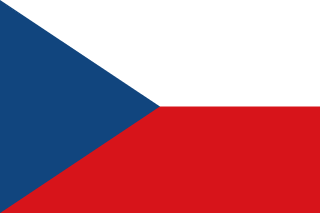
The Czech Republic is a landlocked country in Central Europe, bordered by Germany to the west, Poland to the north, Slovakia to the east, and Austria to the south.
The Czech Republic's name comes from the Czechs, a West Slavic people whose own name is traditionally traced to a legendary tribal leader called Čech, though this origin story is more folklore than documented history.
Landscape: A landlocked plateau ringed by low mountains, including the Bohemian Forest and the Sudetes.
Climate: Temperate continental, warm summers and cold winters with regular snow.
Food: Svíčková (marinated beef in a creamy sauce) and goulash are widely eaten, alongside the country's famously strong beer-brewing tradition.
Prague has been a significant city since the 9th century, later becoming capital of the Kingdom of Bohemia and, briefly in the 14th century under Charles IV, capital of the entire Holy Roman Empire. With a population of around 1.3 million, its historic centre survived the Second World War largely intact, leaving one of the best-preserved medieval city centres in Europe.
The double-tailed lion appears on the Czech coat of arms, tied to the historic Kingdom of Bohemia, and the linden tree is widely regarded as a Czech and broader Slavic national symbol, associated with peace and community gathering.
Bohemian crystal and glassmaking has a centuries-long international reputation, and the Czech Republic also has strong marionette-making traditions, tied to a long history of puppet theatre still performed today. Czech beer brewing traditions run especially deep, with the city of Plzeň giving its name to the pilsner style of lager that's since spread worldwide.
Prague Castle, the largest ancient castle complex in the world by area, has been a seat of power since the 9th century, and Charles Bridge, completed in the 15th century, remains one of Prague's most recognisable landmarks.
The Eurasian lynx survives in small numbers in the Czech Republic's forested border regions, and the country's national parks protect significant areas of central European forest and wetland habitat. Bohemian and Moravian forests also support wild boar and red deer in significant numbers, historically important to regional hunting traditions.
The Czech Republic is among the most secular countries in Europe, with a large majority of the population identifying with no religion, a legacy shaped partly by decades of state atheism under communist rule.
The Czech Republic is a significant exporter of cars and automotive parts, particularly through Škoda, alongside machinery and electronics, closely integrated with the German manufacturing supply chain.
Czech Statehood Day on September 28th honours Saint Wenceslas, patron saint of the Czech lands, and Independent Czechoslovak State Day on October 28th marks the 1918 founding of Czechoslovakia following the collapse of the Austro-Hungarian Empire. Struggle for Freedom and Democracy Day on November 17th commemorates both a 1939 student protest against Nazi occupation and the 1989 Velvet Revolution that peacefully ended communist rule, two significant events sharing the same date decades apart.
Ice hockey holds a place close to the centre of Czech national identity, the country's 1998 Olympic gold medal, won shortly after Czechoslovakia's peaceful 1993 split into separate Czech and Slovak states, treated as a genuinely defining early moment for the new nation. Football and tennis both also draw significant followings, the Czech Republic having produced numerous world-class tennis champions.
The Czech Republic is a parliamentary republic, with a directly elected President serving alongside a Prime Minister who holds most day-to-day executive power, accountable to a bicameral parliament. The country emerged from the peaceful 1993 dissolution of Czechoslovakia, split amicably from Slovakia in what's often cited internationally as a model for how a political union can be dissolved without conflict.
Sněžka, on the border with Poland, is the Czech Republic's highest point at 1,603 metres. The lowest point is where the Elbe River exits the country near Hřensko, sitting around 115 metres above sea level, the country's lowest point despite being well above true sea level, since it's entirely landlocked.
Poland's flag uses the same white-and-red colours as the Czech Republic's, though in a simple two-stripe layout rather than the Czech flag's distinctive blue triangle at the hoist, different enough in structure that the two aren't especially likely to be confused. The Philippines's flag carries a somewhat similar triangle-at-the-hoist structure too, though in entirely different colours, making the resemblance more structural than visual.
Designed by Jaroslav Kursa.
Adopted in 1920 for Czechoslovakia, kept unchanged by the Czech Republic after the country split from Slovakia in 1993, despite Slovakia objecting to the flag's continued use.
Has the highest beer consumption per capita of any country in the world.
Play today's Flagpie →© Flagpie 2026