
North America
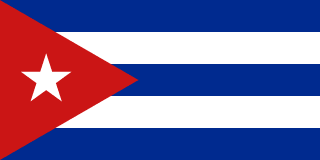
Cuba is the largest island in the Caribbean, sitting just south of Florida and north of Jamaica, at the entrance to the Gulf of Mexico.
Cuba's name likely comes from a Taíno word, possibly meaning 'where fertile land is abundant' or referring to a specific place name, though the exact original meaning has been debated since Spanish colonisation.
Landscape: Mostly flat to rolling plains, with mountain ranges in the southeast, and coastline surrounding the entire island.
Climate: Tropical, warm year-round with a wet season and regular hurricane risk.
Food: Ropa vieja, shredded beef in a tomato-based sauce, is considered a national dish, alongside rice and black beans served with nearly every meal.
Havana was founded by the Spanish in the early 16th century, and its strategic harbour made it a crucial stopover point for treasure fleets sailing back to Spain from across the Americas, prompting the construction of extensive fortifications still standing today. With a population of around 2.1 million, it remains Cuba's political, economic, and cultural centre.
The tocororo, a brightly coloured bird whose plumage happens to match the colours of the Cuban flag, is the national bird. The royal palm is the national tree, appearing throughout the Cuban landscape and on the country's coat of arms.
Cuban cigar-making is a genuine craft tradition with roots stretching back centuries, particularly in the Pinar del Río region, and Cuban son music and dance styles have shaped popular music well beyond the island's borders.
Old Havana, with its well-preserved Spanish colonial architecture, is a UNESCO World Heritage Site, and the Viñales Valley, known for its dramatic limestone hills and tobacco farms, is another of Cuba's most visited landscapes.
The Cuban crocodile, found only on the island, is one of the most endangered crocodile species in the world, and Cuba's coral reefs, among the healthiest remaining in the Caribbean, support significant marine biodiversity.
Cuba is historically Roman Catholic, though decades of state atheism under communist rule significantly reduced formal religious practice, and Santería, a religion blending Yoruba African traditions with Catholic elements, remains widely practised.
Cuba is known internationally for its cigars and rum, both significant exports, alongside nickel, one of the country's most valuable mineral resources, and medical services, which Cuba has exported to numerous countries through doctor exchange programmes.
Liberation Day on January 1st marks both the 1959 triumph of the Cuban Revolution and, coincidentally, 1899, when Spanish colonial rule formally ended, giving the date a doubled historical weight. Revolution Day on July 26th commemorates a 1953 attack on the Moncada Barracks widely regarded as the opening act of the Cuban Revolution, and Christmas, banned as a public holiday for nearly three decades under Fidel Castro's government, was only formally reinstated in 1998 following a papal visit.
Baseball is treated as something close to a national passion in Cuba, introduced in the 19th century and remaining deeply embedded in everyday culture, with the country having produced a remarkable number of internationally successful players despite its small size and long-standing political isolation from the sport's largest professional league. Boxing has similarly produced numerous Cuban Olympic champions across the decades.
Cuba is a one-party socialist state governed by the Communist Party of Cuba, with a National Assembly serving as the country's legislature, though the Party holds the real decision-making authority. The country has operated under this system since Fidel Castro's 1959 revolution, and remains one of the last explicitly communist states in the world, alongside a small handful of others.
Pico Turquino, in the Sierra Maestra mountains, is Cuba's highest point at 1,974 metres, and holds particular revolutionary significance as the site Fidel Castro and his fighters climbed during their guerrilla campaign in the late 1950s. The lowest point sits at sea level along Cuba's extensive coastline.
Puerto Rico's flag is Cuba's closest match by a wide margin, both share the same basic star-and-triangle design with striped fields, a deliberate historical echo since Puerto Rican independence activists modelled their flag on Cuba's in the 19th century, with the colours simply swapped, blue and white reversed between the two designs. The Philippines also uses a broadly similar triangle-and-star layout, though different enough in its specific colours and striping that it's less commonly confused with Cuba specifically.
Designed in 1848 by Cuban exiles in New York seeking independence from Spain, only formally adopted as the national flag in 1902.
One of the last remaining communist states in the world, and the site of the 1962 Cuban Missile Crisis.
Play today's Flagpie →© Flagpie 2026