
Europe
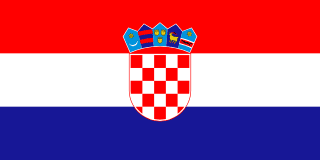
Croatia curves along the Adriatic Sea in southeastern Europe, bordered by Slovenia and Hungary to the north, Serbia to the east, and Bosnia and Herzegovina wrapping around much of its southeast.
Croatia's name comes from the Croats, a Slavic people who settled the region in the early medieval period, though the ultimate origin of the tribal name itself remains genuinely uncertain and debated among historians.
Landscape: A crescent-shaped country combining the Pannonian Plain, the Dinaric Alps, and a long, island-dotted Adriatic coastline.
Climate: Continental inland, Mediterranean along the Adriatic coast.
Food: Peka, meat and vegetables slow-cooked under a metal dome, is a traditional favourite, alongside strong Adriatic seafood cooking along the coast.
Zagreb grew from two neighbouring medieval settlements, Kaptol and Gradec, which merged over centuries into a single city and became capital of independent Croatia in 1991. With a population of around 800,000, it remains the country's political, economic, and cultural centre, distinct from the more tourist-focused coastal cities further south.
The checkered shield, a red-and-white checkerboard pattern called the šahovnica, is Croatia's most recognisable national symbol, appearing on both the flag and national sports jerseys, with roots in Croatian heraldry going back centuries.
The necktie is often credited as a Croatian invention, tracing back to Croatian mercenaries' neckwear in the 17th century, which French fashion later popularised more broadly as the modern tie. Croatia also has strong lace-making traditions, particularly from the island of Pag. Croatian folk dress varies significantly by region, from the Dalmatian coast to inland Slavonia, each with distinct patterns, colours, and headwear.
The historic walled city of Dubrovnik, a UNESCO World Heritage Site, is Croatia's most internationally recognised landmark, alongside Plitvice Lakes National Park, known for its cascading turquoise lakes and waterfalls. Diocletian's Palace in Split, built as a retirement residence for the Roman emperor in the 4th century, still forms the living core of the modern city today, with people's homes and shops built directly into the ancient structure.
Croatia is majority Roman Catholic, with religious identity closely tied historically to Croatian national identity, particularly distinguishing it from neighbouring Orthodox Serbia and Muslim Bosnia during the region's more turbulent 20th-century history.
Croatia is a significant exporter of machinery, ships, and pharmaceuticals, though tourism, particularly along its extensive Adriatic coastline, forms an especially large part of the national economy.
Statehood Day on May 30th marks the 1990 formation of Croatia's first multi-party parliament, and Independence Day on October 8th commemorates the 1991 severing of all remaining ties to the former Yugoslavia. Victory and Homeland Thanksgiving Day on August 5th marks the end of the Croatian War of Independence in 1995, a date of profound significance given the conflict's toll on the country. Saint Blaise's Day in Dubrovnik, honouring the city's patron saint, has been celebrated continuously for over a thousand years.
Football and water polo both hold major places in Croatian sporting identity, the national football team's run to the 2018 World Cup final treated as one of the greatest achievements in the country's sporting history given its small population. Tennis has also produced several of Croatia's most internationally successful athletes in recent decades. Croatian handball and skiing have also produced multiple Olympic medallists relative to the country's modest population.
Croatia is a parliamentary republic, with a directly elected President holding significant but largely foreign-policy-focused authority alongside a Prime Minister who manages most domestic governance, accountable to a single-chamber parliament. The country gained independence from Yugoslavia in 1991 following a war that lasted until 1995, and Croatia later joined both the European Union and the eurozone in the 2010s and 2020s respectively.
Dinara, on the border with Bosnia and Herzegovina, is Croatia's highest point at 1,831 metres. The lowest point sits at sea level along Croatia's extensive and island-studded Adriatic coastline.
Slovenia and Serbia both share Croatia's underlying red-white-blue Pan-Slavic tricolour base, distinguished mainly by each country's own distinct coat of arms at the centre, Croatia's easily recognisable red-and-white checkerboard shield in particular sets it apart clearly once visible. Without that central emblem showing, though, the three flags share enough of a family resemblance that they can genuinely be difficult to tell apart at a glance.
Adopted in 1990 as Croatia moved toward independence from Yugoslavia, based on the historic red-white-blue Pan-Slavic tricolour with a distinctive checkered coat of arms added.
Home to Hum, officially recognised as the smallest town in the world, with a population of around 30 people.
Play today's Flagpie →© Flagpie 2026