
South America
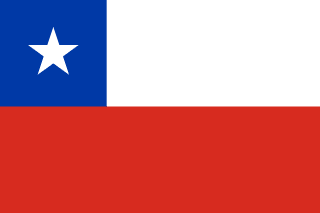
Chile is an unusually long, narrow country running down the western edge of South America, squeezed between the Andes mountains and the Pacific Ocean, with Peru to the north, Bolivia to the northeast, and Argentina along its entire eastern border.
Chile's name origin is debated, with theories pointing to an Indigenous Mapuche or Quechua word possibly referring to the country's cold climate, the depth of a valley, or an onomatopoeic word imitating a bird call, no single explanation is definitively agreed on.
Landscape: An extremely long, narrow country running the length of South America's western coast, squeezed between the Andes and the Pacific.
Climate: Ranges from desert in the north (home to the Atacama, one of the driest places on Earth) to subpolar conditions in the far south.
Food: Empanadas and a seafood stew called curanto are widely eaten, alongside asado, a barbecue tradition shared with Argentina.
Santiago was founded in 1541 by Spanish conquistador Pedro de Valdivia, chosen for its fertile valley setting between the Andes and the coast. With a population of around 6.3 million across greater Santiago, it has remained Chile's political and economic centre for the country's entire history as an independent nation.
The huemul, a rare Andean deer, appears alongside the Andean condor on Chile's coat of arms, both chosen to represent the country's mountainous geography. The copihue, a striking red bell-shaped flower found in Chile's southern forests, is the national flower.
Chilean horsemanship culture, particularly the huaso (Chilean cowboy) tradition, has shaped regional dress and rodeo customs still actively practised today. Lapis lazuli jewellery is a distinctly Chilean craft, since Chile is one of only a handful of countries where the stone is mined.
Easter Island, a Chilean territory in the Pacific, is home to the moai, monumental stone statues carved by the Rapa Nui people centuries ago, among the most recognisable archaeological sites in the world. The Atacama Desert, one of the driest places on Earth, is another of Chile's most striking landscapes.
The huemul deer, now endangered, survives in small numbers in Chile's Patagonian forests, and the country's long coastline supports significant populations of penguins, sea lions, and whales, particularly around its southern fjords.
Chile is historically majority Roman Catholic, though religious observance has declined significantly in recent decades, and the Mapuche people represent the country's largest Indigenous group, with an ongoing and often contested relationship to land and political recognition.
Chile is the world's largest producer and exporter of copper by a wide margin, alongside wine, of which it's one of the largest exporters globally, and fresh fruit.
Independence Day on September 18th, known as Fiestas Patrias, marks 1810 and is celebrated over an extended period with traditional cueca dancing, asados (barbecues), and rodeos nationwide. Navy Day on May 21st commemorates a significant 1879 naval battle during the War of the Pacific, and Christmas in Chile falls during the Southern Hemisphere summer, giving it a notably different, often beach-adjacent character than in the Northern Hemisphere. Chile's extended geography means the country celebrates a genuinely wide range of regional festivals, from Aymara traditions in the north to Mapuche celebrations further south.
Football holds the largest following in Chile, though the country's most distinctly national sporting tradition is rodeo, specifically Chilean rodeo, officially declared the national sport in 1962, involving two riders working together to pin cattle against a curved arena wall. Tennis has also produced some of Chile's most internationally successful athletes in recent decades.
Chile is a presidential republic, with a President serving as both head of state and government, elected for a single four-year term. The country returned to democracy in 1990 following General Augusto Pinochet's 17-year military dictatorship, and has since become widely regarded as one of the more institutionally stable democracies in Latin America.
Ojos del Salado, on the border with Argentina, is Chile's highest point at 6,893 metres, and is also the highest active volcano in the world. The Atacama Trench off Chile's Pacific coast, though underwater rather than land, plunges to some of the deepest points in the entire Pacific Ocean.
Texas's state flag, though not a national flag, is famously near-identical to Chile's in overall layout, a lone star on a blue canton beside horizontal stripes, a coincidence often noted specifically because it isn't a national comparison at all. Among actual countries, Cuba and Puerto Rico's flag both use a star-and-triangle motif too, though arranged differently enough, and using different colours, that they're not commonly confused with Chile specifically.
Adopted in 1817 during the fight for independence from Spain, sometimes nicknamed 'La Estrella Solitaria' (The Lone Star).
One of the most volcanically active countries in the world, with dozens of active volcanoes along the Andes.
Play today's Flagpie →© Flagpie 2026