
North America
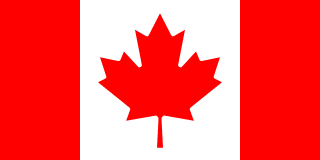
Canada occupies the northern half of North America, bordered only by the United States to its south, stretching from the Atlantic Ocean in the east to the Pacific in the west and the Arctic Ocean to the north.
Canada's name likely comes from 'kanata,' a St. Lawrence Iroquoian word meaning 'village' or 'settlement,' which early French explorers misapplied to the wider region after Indigenous guides used it to refer to a specific village near modern Quebec City.
Landscape: The second-largest country by area, spanning Rocky Mountains, vast prairies, boreal forest, and Arctic tundra in the north.
Climate: Ranges from temperate in the south to subarctic and Arctic further north, with genuinely cold winters across most of the country.
Food: Poutine, fries topped with cheese curds and gravy, is the best known national dish, alongside maple syrup as a defining ingredient.
Ottawa was chosen as Canada's capital in 1857 by Queen Victoria, partly because its location on the border between English-speaking Ontario and French-speaking Quebec made it a politically neutral compromise between the two much larger, competing cities of Toronto and Montreal. With a population of around a million, it remains considerably smaller than either of those two cities despite its political role.
The maple leaf has represented Canada since the 18th century, well before it appeared on the modern flag, and the beaver is the country's official national animal, chosen partly for its historical importance to the fur trade that shaped early Canadian settlement and economy.
Indigenous crafts, including Inuit soapstone carving, Northwest Coast wood carving, and Métis beadwork, represent some of Canada's oldest and most distinct artistic traditions, many still actively practised and taught today. Quebec also carries strong French-Canadian craft traditions in textiles and woodworking.
Niagara Falls, shared with the United States, is Canada's best-known natural landmark, alongside the Rocky Mountains and Banff National Park, one of the oldest national parks in the world.
The moose, grizzly bear, and Canada lynx are among the country's best-known large mammals, spread across its vast forests and mountain ranges. Canada's Arctic regions are also home to polar bears, narwhals, and other species specifically adapted to sea ice environments.
Canada has no official religion, and its population includes large Christian, particularly Catholic in Quebec, and increasingly secular communities, alongside significant Muslim, Sikh, and Hindu populations shaped by decades of immigration. Indigenous peoples, including First Nations, Inuit, and Métis communities, represent distinct cultural and political groups recognised under Canadian law.
Canada is a major exporter of crude oil, natural gas, timber, and minerals, alongside a significant automotive manufacturing sector, and its economy is closely tied to trade with the United States, its largest trading partner by a wide margin.
Canada Day on July 1st marks the 1867 Confederation that united several British colonies into the Dominion of Canada, celebrated nationwide with fireworks and public festivities. Thanksgiving, held on the second Monday of October, predates the American holiday of the same name and isn't tied to it, and Victoria Day in late May, honouring Queen Victoria's birthday, remains a distinctly Canadian holdover from the country's history within the British Empire.
Ice hockey is Canada's official national winter sport and by far its most culturally significant, the country having invented the modern game in the 19th century and continuing to produce a disproportionate share of the world's top professional players. Lacrosse, adapted from a game played by Indigenous peoples for centuries before European contact, is Canada's official national summer sport.
Canada is a federal parliamentary democracy and constitutional monarchy, with the British monarch as ceremonial head of state represented domestically by a Governor General, while real executive power sits with the Prime Minister and Parliament. The country's ten provinces and three territories retain considerable independent authority, particularly Quebec, which holds a distinct legal and cultural status within the federation.
Mount Logan, in the Yukon, is Canada's highest point at 5,959 metres and the second-highest peak in North America after Denali, sitting within one of the largest non-polar icefields in the world. The lowest point sits at sea level along Canada's extraordinarily long coastline, the longest of any country on Earth.
There's no other national flag with a maple leaf, making Canada's flag genuinely distinctive and unlikely to be confused with anything else, red and white alone isn't unique, but the specific leaf design at the centre is unmistakably Canada's own. The closest visual cousin in terms of general layout, a bold central emblem on a plain field, would be Japan's flag, though the actual symbols and colour balance are different enough that mixing the two up would be a genuine stretch.
Designed by George Stanley.
Adopted in 1965, replacing the Canadian Red Ensign, after a national design competition and parliamentary debate that became known as the Great Flag Debate.
Has the longest coastline of any country on Earth, longer than every other country's coastline combined.
Play today's Flagpie →© Flagpie 2026