
Africa
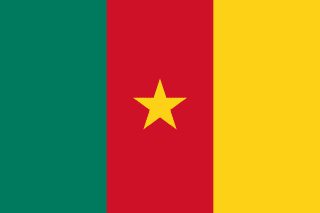
Cameroon sits at the point where West and Central Africa meet, bordered by Nigeria to the west, Chad to the northeast, the Central African Republic to the east, and Equatorial Guinea, Gabon, and the Republic of the Congo to the south.
Cameroon's name comes from the Portuguese 'Rio dos Camarões,' meaning 'river of shrimps,' after Portuguese explorers who reached the coast in the 15th century found the Wouri River teeming with shrimp, a name later adapted by other European colonial powers.
Landscape: Extremely varied for its size, spanning coastal plain, dense rainforest, savanna, and volcanic mountains including Mount Cameroon, an active volcano.
Climate: Tropical along the coast and south, becoming drier moving north toward the Sahel.
Food: Ndolé, a stew made with a bitter leaf vegetable, peanuts, and often fish or meat, is widely considered the national dish.
Yaoundé was founded in 1887 by German colonial traders as a base for the rubber and ivory trade, chosen partly for its elevated, cooler position compared to the humid coast. With a population of around 2.8 million, it became capital under French administration and remained so after independence, while the port city of Douala grew into the country's larger economic centre instead.
The lion appears on Cameroon's coat of arms, and the country is nicknamed 'Africa in miniature' for containing nearly every major African landscape type, desert, rainforest, savanna, mountains, and coastline, within a single nation.
Cameroonian wood carving and bronze casting, particularly among the Bamileke and Tikar peoples, reflect deep royal and ceremonial traditions, and Cameroon's makossa and bikutsi musical styles have become significant cultural exports across West and Central Africa.
Mount Cameroon, an active volcano and the highest peak in West and Central Africa at over 4,000 metres, dominates the country's southwestern landscape, and the Waza National Park protects significant savanna wildlife in the country's far north.
Cameroon's Dja Faunal Reserve, a UNESCO World Heritage Site, protects one of the largest and most intact rainforests in Africa, home to forest elephants, gorillas, and chimpanzees.
Cameroon is religiously mixed, with Christian and Muslim populations both significant and roughly split along a rough north-south geographic line, and the country recognises both English and French as official languages, a legacy of its divided colonial history between Britain and France.
Cameroon is a significant exporter of crude oil, cocoa, and timber, with agriculture and natural resources both forming substantial parts of the national economy.
National Day on May 20th marks 1972, when Cameroon adopted a unified constitution merging its formerly separate French and British administered territories into a single state. Youth Day on February 11th celebrates the country's young population with parades and cultural performances held in cities and towns nationwide. Cameroon's National Youth Day in February features parades and cultural performances in cities and towns nationwide.
Football holds a place in Cameroonian national identity matched by few other African nations, the team's run to the 1990 World Cup quarter-finals, the first African team ever to reach that stage, remaining one of the most celebrated moments in African football history and a source of enduring national pride. Boxing and athletics have also produced notable Cameroonian competitors internationally. Cameroonian wrestling and judo have also produced notable competitors at continental championships.
Cameroon is a presidential republic, with a President serving as both head of state and government. The country's political landscape remains significantly shaped by the divide between its majority French-speaking regions and minority English-speaking regions, a tension with roots in Cameroon's split colonial history that has contributed to significant unrest in recent years. Cameroon's bilingual French-English structure remains formally enshrined despite ongoing regional tensions. Cameroon's oil and agricultural exports remain central to its economy alongside its significant timber industry. Cameroon's diverse geography has earned it the nickname 'Africa in miniature' among travellers and geographers alike.
Mount Cameroon, an active volcano, is the country's highest point at 4,040 metres, the highest peak in West and Central Africa. The lowest point sits at sea level along Cameroon's Atlantic coastline.
Senegal's flag uses the exact same green-yellow-red vertical tricolour as Cameroon's, differing only in Senegal's central green star versus Cameroon's own central yellow star, close enough that the two are genuinely easy to mix up without a careful look at that central emblem.
Adopted in 1957, with the star added in 1975 to represent national unity between the country's formerly separate French and British administered territories.
Home to nearly 9,000 recorded plant species, with new ones still being discovered every year.
Play today's Flagpie →© Flagpie 2026