
Africa
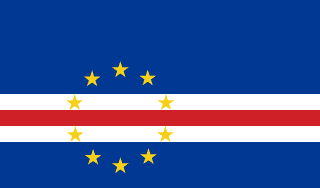
Cabo Verde is an archipelago nation in the Atlantic Ocean, sitting several hundred kilometres off the coast of Senegal in West Africa. Its name means 'green cape' in Portuguese.
Cabo Verde's name means 'green cape' in Portuguese, named after the nearby Cap-Vert peninsula on the Senegalese mainland, despite the islands themselves actually being fairly dry and only seasonally green.
Landscape: A volcanic archipelago of ten islands, mostly dry and mountainous with very little arable land.
Climate: Arid to semi-arid, warm year-round with a short rainy season, frequently affected by drought.
Food: Cachupa, a slow-cooked stew of corn, beans, and often fish or meat, is the national dish.
Praia has served as Cabo Verde's capital since 1770, replacing the earlier capital of Cidade Velha, chosen for its more defensible plateau location. With a population of around 170,000, it remains the country's largest city and dominant economic centre across the archipelago.
The loggerhead sea turtle, which nests in significant numbers on Cabo Verde's beaches, is closely tied to the islands' identity and conservation efforts, and morna, a melancholic musical style, holds deep symbolic significance as an expression of Cape Verdean longing and emigration experience.
Cape Verdean morna music, popularised internationally by singer Cesária Évora, reflects the islands' unique Portuguese-African Creole culture, and traditional Cape Verdean weaving and pottery remain practised on some of the smaller, more rural islands.
Cidade Velha, the first permanent European colonial settlement in the tropics, founded in 1462, is a UNESCO World Heritage Site, and Fogo, an active volcanic island with a crater village built inside its caldera, is one of Cabo Verde's most distinctive landscapes. Santo Antão's dramatic terraced valleys and hiking trails have made it one of the most visited islands for trekkers in the archipelago.
Cabo Verde's beaches, particularly on the island of Boa Vista, are among the most significant loggerhead turtle nesting sites in the entire Atlantic Ocean.
Cabo Verde is majority Roman Catholic, reflecting Portuguese colonial history, and the country's culture and Cape Verdean Creole language reflect a genuine blend of Portuguese and West African heritage, distinct from either source alone.
Cabo Verde's economy relies significantly on tourism and remittances from Cape Verdeans living abroad, with formal goods exports, including fish products, forming a comparatively smaller share given the country's limited natural resources.
Independence Day on July 5th marks 1975, when Cabo Verde gained sovereignty from Portugal. National Heroes Day on January 20th honours Amílcar Cabral, a key independence movement leader assassinated shortly before Cabo Verde and Guinea-Bissau both achieved sovereignty, a figure held in particular regard across both nations. Cabo Verde's Gamboa music festival in Praia draws significant crowds celebrating Cape Verdean musical heritage.
Football holds the largest domestic following in Cabo Verde, the small island nation's qualification for the 2013 Africa Cup of Nations, its first ever major tournament appearance, treated as a landmark achievement given the country's tiny population. The Cape Verdean diaspora, considerably larger than the resident population, has also produced notable players for other national teams, particularly Portugal's. Cape Verdean basketball has also grown in domestic popularity in recent years.
Cabo Verde is a semi-presidential republic, splitting executive authority between a directly elected President and a Prime Minister accountable to a single-chamber National Assembly. The country is widely regarded as one of Africa's most stable democracies, having maintained continuous peaceful elections since adopting multi-party politics in 1991. Cabo Verde's economy relies significantly on remittances from its large diaspora population living abroad.
Pico do Fogo, an active volcano, is Cabo Verde's highest point at 2,829 metres, with a village remarkably still inhabited inside its volcanic caldera. The lowest point sits at sea level around the archipelago's islands. Cabo Verde's volcanic islands vary significantly in terrain, from Fogo's active volcano to flatter, drier eastern islands.
There's no especially close match for Cabo Verde's flag, the blue field with horizontal white-red-white stripes and a circle of ten yellow stars is a distinctive combination, those ten stars specifically representing the archipelago's main islands, a detail unique to Cabo Verde's own design. Cabo Verde's blue field is a notable departure from the green, yellow, and red used by many mainland West African neighbours.
Adopted in 1992, replacing a Pan-African style flag shared symbolically with Guinea-Bissau at independence, redesigned to reflect a distinct Cape Verdean identity.
An archipelago of volcanic islands, once an important stopover point in the transatlantic slave trade and later a refuelling stop for transatlantic flights.
Play today's Flagpie →© Flagpie 2026