
Europe
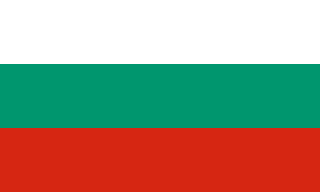
Bulgaria sits in southeastern Europe on the Balkan Peninsula, bordered by Romania to the north, Serbia and North Macedonia to the west, Greece and Turkey to the south, with a coastline on the Black Sea to the east.
Bulgaria's name comes from the Bulgars, a group of Turkic-speaking peoples who migrated into the region and merged with the local Slavic population around the 7th century AD, eventually adopting the Slavic language while retaining their own name for the resulting state.
Landscape: The Balkan Mountains run east-west through the centre, with the fertile Danubian Plain to the north and the Rila and Pirin ranges in the southwest.
Climate: Temperate continental, cold snowy winters and hot summers.
Food: Banitsa, a pastry filled with cheese and egg, is a genuine daily staple, alongside a strong yoghurt-making tradition Bulgaria claims to have originated.
Sofia has been continuously inhabited for thousands of years, becoming capital of modern Bulgaria in 1879 following independence from Ottoman rule, chosen partly for its central location within the Balkan Peninsula. With a population of around 1.2 million, it sits at the base of Vitosha Mountain, giving the city an unusually dramatic natural backdrop for a European capital.
The lion appears on Bulgaria's coat of arms, tied to medieval Bulgarian heraldry, and the rose holds particular significance given Bulgaria's Rose Valley, one of the world's largest producers of rose oil for the perfume industry.
Bulgarian rose oil production, concentrated in the Rose Valley near Kazanlak, has been a significant craft and export industry for centuries, and traditional Bulgarian folk costume, along with distinctive polyphonic choral singing, remain living cultural traditions.
The Rila Monastery, founded in the 10th century and rebuilt after a fire in the 19th, is Bulgaria's most significant religious site, and the ancient Thracian tombs near Kazanlak, decorated with well-preserved frescoes over 2,000 years old, are a UNESCO World Heritage Site.
Bulgaria's Rila and Pirin mountain ranges support brown bears, wolves, and significant bird populations, and the country's Black Sea coast is an important stop for migratory birds travelling between Europe and Africa.
Bulgaria is majority Orthodox Christian, and the Bulgarian Orthodox Church has been credited with helping create the Cyrillic alphabet, developed there in the 9th century and now used across much of the Slavic world.
Bulgaria is a significant exporter of machinery, refined petroleum products, and agricultural goods, and remains the world's largest producer of rose oil, a key ingredient in high-end perfumery.
Liberation Day on March 3rd marks 1878, when Bulgaria gained autonomy from Ottoman rule following Russian intervention, and remains the country's most significant national holiday. Saints Cyril and Methodius Day on May 24th celebrates Bulgarian culture, education, and the Cyrillic alphabet, credited to the two 9th-century brothers, and Baba Marta on March 1st, welcoming spring, involves the exchange of red-and-white martenitsi bracelets, a distinctly Bulgarian folk tradition. Rose Festival in Kazanlak each June celebrates the country's globally significant rose oil industry with parades and rose-picking rituals.
Weightlifting and wrestling both hold particular historic significance in Bulgarian sporting culture, the country having produced a remarkable number of Olympic champions in both disciplines relative to its population, particularly during the latter half of the 20th century. Football also draws a significant domestic following. Bulgarian rhythmic gymnastics has also produced a remarkable number of world and Olympic champions relative to the country's size.
Bulgaria is a parliamentary republic, with a directly elected President serving a largely ceremonial role and a Prime Minister holding real executive power, accountable to a single-chamber National Assembly. The country's modern democratic system was established following the collapse of communist rule in 1989, and Bulgaria later joined both NATO and the European Union in the 2000s.
Musala, in the Rila Mountains, is Bulgaria's highest point at 2,925 metres, the highest peak in the Balkan Peninsula. The lowest point sits at sea level along Bulgaria's Black Sea coastline.
Sierra Leone's flag shares Bulgaria's exact white-green-red-adjacent colour family, though arranged completely differently and with blue in place of red, different enough that confusion is unlikely. Hungary uses the same three colours as Bulgaria too, red, white, and green, but in a different order, Hungary places red on top rather than white, similar enough in palette that a passing glance could plausibly conflate the two.
The white-green-red tricolour dates to 1878, adopted after independence from the Ottoman Empire, briefly featured a communist emblem from 1946 to 1990.
The birthplace of the Cyrillic alphabet, developed there in the 9th century.
Play today's Flagpie →© Flagpie 2026