
South America
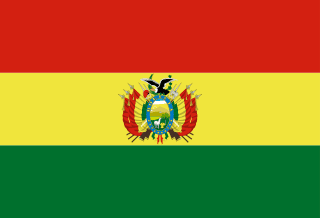
Bolivia is a landlocked country in central South America, bordered by Peru and Chile to the west, Brazil to the north and east, and Paraguay and Argentina to the south. It's named after Simón Bolívar, the revolutionary leader who helped liberate much of South America from Spanish rule.
Bolivia is named after Simón Bolívar, the revolutionary leader who played a central role in liberating much of South America from Spanish colonial rule, one of relatively few countries named directly after an individual person.
Landscape: Includes the high Andean Altiplano plateau, home to Lake Titicaca, alongside Amazon rainforest in the lowlands to the east.
Climate: Varies hugely by altitude, cold and dry in the Altiplano, tropical in the eastern lowlands.
Food: Salteñas, baked pastries filled with a juicy meat and vegetable stew, are a widely loved snack, alongside a strong quinoa-growing tradition.
Bolivia has two capitals, Sucre, the constitutional capital and seat of the judiciary, and La Paz, the seat of government and legislature, a split dating back to a political compromise following a civil conflict in the early 20th century. La Paz, with a population of around 760,000, sits at over 3,600 metres elevation, making it the highest administrative capital in the world.
The Andean condor is Bolivia's national bird, and the kantuta flower, sacred in Inca tradition, is the national flower, its colours matching those of the Bolivian flag.
Bolivian textile weaving has some of the longest continuous traditions in South America, with certain Andean communities' techniques and patterns predating the Inca Empire itself, and traditional Bolivian masks, used in festivals like the Diablada dance, are elaborately crafted works of folk art in their own right.
Salar de Uyuni, the largest salt flat in the world, creates a mirror-like surface during the wet season considered one of the most striking natural landscapes on Earth, and Tiwanaku, a pre-Inca archaeological site, reflects one of the oldest major civilisations in the Andes.
Bolivia's share of the Amazon basin, combined with its high Andean plateau, gives it extraordinary biodiversity across very different ecosystems, including flamingos on its high-altitude salt lakes and jaguars in its lowland rainforest.
Bolivia is majority Roman Catholic, though Indigenous Andean spiritual traditions remain widely practised, often alongside rather than separate from Catholic belief, and the country has one of the largest proportional Indigenous populations in South America.
Bolivia is a significant exporter of natural gas and minerals, including tin and zinc, and holds some of the largest known lithium reserves in the world, an increasingly significant resource given global demand for batteries.
Independence Day on August 6th marks 1825, when Bolivia declared sovereignty from Spain, named directly after independence leader Simón Bolívar. Alasitas, a unique festival held in La Paz each January, involves the exchange of miniature objects representing wishes for the coming year, houses, cars, diplomas, a genuinely distinctive local tradition with roots in pre-Columbian Aymara custom. Oruro Carnival, a UNESCO-recognised celebration blending Indigenous and Catholic tradition, is considered one of the most significant cultural events in the Andes.
Football holds the largest domestic following in Bolivia, and the country's high-altitude capital, La Paz, has become notorious among visiting international teams for the genuine competitive advantage it gives Bolivian players used to playing at elevation. Traditional Andean sports and games, including a form of Indigenous football-adjacent play, remain practised in some rural communities. Bolivian football benefits distinctly from La Paz's thin air, a genuine and widely acknowledged home advantage.
Bolivia is a presidential republic, with a President serving as both head of state and government, elected for a five-year term. The country has one of the largest proportional Indigenous populations in South America, and its 2009 constitution formally recognised Bolivia as a plurinational state, acknowledging the country's many distinct Indigenous nations alongside the wider Bolivian state.
Nevado Sajama, an inactive volcano, is Bolivia's highest point at 6,542 metres. The lowest point is where the Paraguay River exits the country in the country's far southeast, sitting around 90 metres above sea level, Bolivia's lowest point despite being well above true sea level, since the country is entirely landlocked.
Ghana's flag uses the exact same red-yellow-green horizontal tricolour as Bolivia's, purely by coincidence rather than any historical connection between the two, and Bolivia's own coat of arms at the centre of its official flag is what most clearly distinguishes it, absent that emblem, the two flags are genuinely difficult to tell apart.
Adopted in 1851, with the state coat of arms added to the centre of the civil flag version in 1888.
Home to the world's largest salt flat, the Salar de Uyuni.
Play today's Flagpie →© Flagpie 2026