
North America
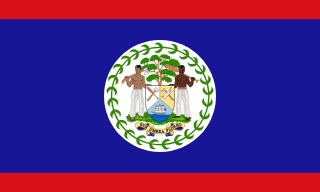
Belize sits on the eastern coast of Central America, bordered by Mexico to the north and Guatemala to the west and south, with the Caribbean Sea to the east. It's the only country in Central America where English is the official language.
Belize's name origin is debated, with theories ranging from a corruption of the name of an early pirate or logger, to a Maya word possibly meaning 'muddy water,' referring to the Belize River.
Landscape: Coastal plain and dense tropical rainforest, with the Maya Mountains in the south and the Belize Barrier Reef, the second-largest in the world, just offshore.
Climate: Tropical, hot and humid with a distinct wet season and hurricane risk.
Food: Rice and beans cooked in coconut milk, typically served with stewed chicken, is the everyday national dish.
Belmopan became Belize's capital in 1970, built after Hurricane Hattie devastated the previous capital, Belize City, in 1961, prompting the government to relocate to higher, less hurricane-exposed ground. With a population of around 20,000, it remains one of the smallest national capitals in the world.
The keel-billed toucan, with its strikingly colourful beak, is Belize's national bird, and the black orchid is the national flower.
Garifuna drumming and dance, recognised by UNESCO, reflect a distinct Afro-Indigenous culture with roots in shipwrecked and escaped enslaved Africans who settled along the Central American coast, and Maya weaving traditions continue among Belize's Indigenous communities. Belizean punta music and dance, developed by the Garifuna community, blends African, Indigenous, and Caribbean influences into a genre now recognised by UNESCO.
The Great Blue Hole, a massive marine sinkhole visible from space, is Belize's most internationally recognised natural landmark, and the Belize Barrier Reef, the second-largest coral reef system in the world, is a UNESCO World Heritage Site. Xunantunich, an ancient Maya ceremonial centre, offers visitors the chance to climb one of the tallest surviving Maya structures in the country.
Belize's jaguar population is considered among the healthiest in Central America, protected significantly by the Cockscomb Basin Wildlife Sanctuary, the world's first jaguar reserve. The country's barrier reef also shelters the West Indian manatee, with Belize's waters considered one of the more important remaining refuges for the species in the region.
Belize is majority Christian, with both Catholic and Protestant traditions well represented, and the country is ethnically diverse, including Mestizo, Creole, Garifuna, and Maya populations, each maintaining distinct cultural traditions.
Belize is a significant exporter of sugar, citrus products, and bananas, with agriculture forming a substantial share of the country's export economy.
Independence Day on September 21st marks 1981, when Belize gained sovereignty from British colonial rule, the last country in mainland Central America to do so. Garifuna Settlement Day on November 19th commemorates the 1832 arrival of Garifuna people, descendants of shipwrecked and escaped enslaved Africans who blended with Indigenous Caribbean populations, a day of particular cultural significance for Belize's southern coastal communities. Belize's National Heroes and Benefactors Day in March honours key figures from the country's history.
Football holds the largest domestic following in Belize, and the country's own particular sporting distinction comes from its extraordinary marine environment, with sport fishing and diving drawing significant international attention given Belize's position along the second-largest coral reef system in the world. Belizean athletics has grown through increased participation in Central American regional competitions.
Belize is a parliamentary constitutional monarchy, with the British monarch as ceremonial head of state represented domestically by a Governor-General, while a Prime Minister holds real executive power accountable to a bicameral National Assembly. The country's border dispute with neighbouring Guatemala, which has at various points claimed all or part of Belizean territory, remains a longstanding and unresolved feature of its foreign policy. Belize's parliamentary system closely mirrors the wider Commonwealth Caribbean model shared with several regional neighbours.
Doyle's Delight is Belize's highest point at 1,124 metres, located deep within the Maya Mountains and among the more recently confirmed highest points of any country, given how remote and difficult to survey the area is. The lowest point sits at sea level along Belize's Caribbean coastline.
There's no especially close match for Belize's flag, the detailed central coat of arms depicting two figures and a mahogany tree, set against a blue field bordered by red stripes, makes it one of the more visually intricate national flags in the world and one of very few to depict actual human figures at all.
Adopted in 1981 upon independence, one of the few national flags in the world to depict actual human figures.
The only country in Central America where English is the official language.
Play today's Flagpie →© Flagpie 2026