
Europe
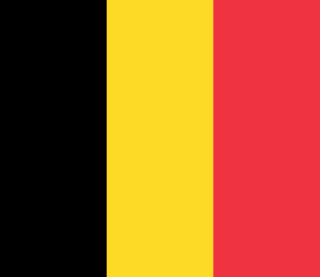
Belgium sits on the North Sea coast of Western Europe, bordered by the Netherlands to the north, Germany to the east, and France to the south and west.
Belgium's name comes from the Belgae, a group of tribes described by Julius Caesar as inhabiting the region in ancient times, whose name was revived centuries later when the modern country was founded in 1830.
Landscape: Low coastal plain in the northwest, central rolling hills, and the forested Ardennes plateau in the southeast.
Climate: Temperate maritime, mild with regular rain spread throughout the year.
Food: Belgian waffles, fries (which Belgium claims to have invented, not France), and a huge variety of chocolate and beer.
Brussels grew from a small settlement founded around the 10th or 11th century into Belgium's capital upon the country's independence in 1830, and later became host to the headquarters of both the European Union and NATO, making it a genuine centre of European politics. With a population of around 1.2 million across the Brussels-Capital Region, it functions as a de facto capital of Europe as much as of Belgium itself.
The lion appears throughout Belgian heraldry, tied to both Flanders and Wallonia's own regional symbols. Belgium's Mannequin Pis, a small bronze statue of a urinating boy, has become an unlikely but genuine national symbol of Brussels through centuries of local legend.
Belgian lace, particularly from Bruges, has an international reputation built over centuries of fine handwork, and Belgium is equally renowned for chocolate-making and beer brewing, both treated as genuine craft traditions rather than purely industrial food production.
The Grand Place in Brussels, a historic market square surrounded by ornate guild houses, is a UNESCO World Heritage Site, and the medieval canal city of Bruges remains one of the best-preserved historic centres in Europe.
Belgium's Ardennes forest region in the south supports wild boar and red deer, among the largest wild mammals remaining in this densely populated, heavily developed country.
Belgium is historically Roman Catholic, though religious practice has declined significantly, and the country is linguistically and culturally split between Dutch-speaking Flanders in the north and French-speaking Wallonia in the south, a divide that shapes much of Belgian politics.
Belgium is a major exporter of chemicals and pharmaceuticals, machinery, and diamonds, with the city of Antwerp serving as one of the largest diamond trading centres in the world.
Belgian National Day on July 21st marks the 1831 inauguration of the country's first king following independence from the Netherlands, celebrated with a military parade in Brussels and fireworks nationwide. Armistice Day on November 11th holds particular weight in Belgium given the country's central role as a battlefield during the First World War, and Saint Nicholas Day on December 6th remains a distinctly Belgian and Dutch gift-giving tradition separate from Christmas itself. The Ommegang in Brussels, a historical pageant tracing back centuries, remains a significant annual cultural re-enactment in the capital.
Football holds the largest following in Belgium, the national team's so-called 'golden generation' of the 2010s reaching the top of the FIFA world rankings, a remarkable achievement for a country of Belgium's modest size. Cycling also carries deep cultural weight, Belgium having produced some of the sport's most legendary competitors and hosting several of its most historic annual races.
Belgium is a federal parliamentary constitutional monarchy, with the King serving a ceremonial role and real executive power held by a Prime Minister accountable to a bicameral parliament. The country's complex federal structure, splitting authority between Dutch-speaking Flanders, French-speaking Wallonia, and the Brussels-Capital Region, reflects deep linguistic and regional divisions that have at times made forming a government notoriously difficult and slow.
Signal de Botrange, in the Ardennes, is Belgium's highest point at just 694 metres, reflecting the country's generally modest, rolling terrain outside its hillier southeast. The lowest point sits at sea level along Belgium's short North Sea coastline.
Germany's flag uses the exact same three colours, black, gold (yellow), and red, as Belgium's, though arranged as horizontal stripes rather than Belgium's vertical ones, making the two genuinely easy to mix up at a glance. Beyond that specific pair, no other flag closely matches this particular colour trio in the same proportions.
Adopted in 1831 after Belgian independence from the Netherlands, colours drawn from the coat of arms of the Duchy of Brabant.
Home to more castles per square kilometre than almost any other country in the world.
Play today's Flagpie →© Flagpie 2026