
North America
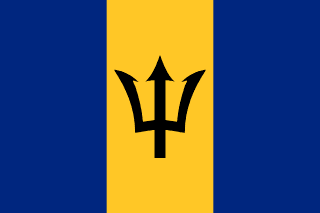
Barbados is a small island country in the Caribbean, sitting further east into the Atlantic than most of its neighbours, roughly northeast of Trinidad and Tobago.
Barbados's name comes from the Portuguese or Spanish word for 'bearded,' likely referring to the island's fig trees, whose long hanging roots resemble a beard, as noted by early European explorers.
Landscape: A relatively flat coral limestone island, ringed by beaches, with a low central highland region.
Climate: Tropical, warm year-round, sitting further east than most Caribbean islands and slightly outside the main hurricane belt.
Food: Cou-cou and flying fish, a cornmeal dish served with stewed flying fish, is the national dish.
Bridgetown was founded by English settlers in 1628 and has served as Barbados's capital since. With a population of around 110,000 in the metropolitan area, its historic Garrison area, reflecting British colonial military history, is a UNESCO World Heritage Site.
The Barbados pride, a hardy flowering shrub, is the national flower, and the trident, appearing on the national flag, symbolises independence and a break from the country's colonial past.
Barbadian pottery, using local clay techniques passed down for generations, and traditional Bajan quilting remain practised crafts on the island. Rum production in Barbados dates back to the 1650s, with the island widely credited as the birthplace of rum distillation itself.
Harrison's Cave, an extensive network of limestone caverns, and the historic Garrison area in Bridgetown are among Barbados's most significant sites. Barbados was the first Caribbean island settled by the English, in 1627, and its long uninterrupted British colonial history, uncommon for the region, shaped much of its distinct architecture and institutions.
Barbados's surrounding waters support significant populations of sea turtles, and the island's relatively small size and long agricultural history mean much of its native forest has been replaced by sugarcane cultivation over centuries. The green monkey, introduced from West Africa centuries ago, is now a common and distinctive sight across the island.
Barbados is majority Christian, predominantly Anglican and other Protestant denominations, reflecting its long history as a British colony, one of the longest-held in the Caribbean. The Crop Over festival, celebrating the historic sugar cane harvest, has grown into Barbados's largest annual cultural celebration, combining music, costume, and food traditions.
Barbados exports rum, one of its most historically significant products, alongside sugar and, increasingly, financial and business services.
Independence Day on November 30th marks 1966, when Barbados gained sovereignty from British colonial rule, and Errol Barrow Day on January 21st honours the country's first Prime Minister and a key figure in its independence movement. Crop Over, held from June through August, celebrates the historic sugar cane harvest and has grown into the country's largest and most significant annual cultural festival. Barbados's Kadooment Day parade caps off the Crop Over festival with elaborate costumed street performances.
Cricket holds a place in Barbadian national identity comparable to few other sports anywhere, the small island having produced a remarkable number of players for the historically dominant West Indies cricket team, including several of the sport's most celebrated all-time greats. Athletics has also produced notable Barbadian Olympic success relative to the country's very small population. Barbadian netball has also produced regionally competitive teams in recent years. Barbadian surfing has grown in profile given the island's notable Atlantic-facing east coast breaks.
Barbados is a parliamentary republic, having transitioned from a constitutional monarchy in 2021 by removing the British monarch as head of state, one of the more recent Caribbean nations to make this shift. A largely ceremonial President now serves as head of state alongside a Prime Minister who holds real executive power, accountable to a bicameral parliament. The transition to a republic in 2021 was formally marked with Barbadian-born singer Rihanna declared a National Hero. Barbados maintains close economic ties with both the United Kingdom and the wider Caribbean community.
Mount Hillaby is Barbados's highest point at 340 metres. The lowest point sits at sea level around the island's coastline.
There's no especially close match for Barbados's flag, the blue-gold-blue vertical stripes with a black trident at the centre are a distinctive combination, the broken trident specifically representing a deliberate break from the country's colonial past, a symbolic detail unique to Barbados's own design.
Designed by Grantley Prescod.
Adopted in 1966 upon independence from Britain, chosen from over 1,000 public design submissions.
The most easterly island in the Caribbean.
Play today's Flagpie →© Flagpie 2026