
Asia
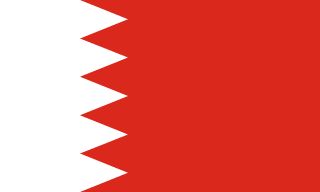
Bahrain is a small archipelago nation in the Persian Gulf, sitting off the coast of Saudi Arabia, to which it's connected by a causeway, and near Qatar to the southeast.
Bahrain's name means 'two seas' in Arabic, likely referring to the meeting of fresh underground water springs with the surrounding salt water of the Persian Gulf, a notable natural feature of the islands historically.
Landscape: A small, low-lying archipelago in the Persian Gulf, mostly flat desert with very little natural fresh water.
Climate: Desert climate, extremely hot and humid summers, mild winters.
Food: Machboos, a spiced rice dish, is widely eaten, alongside a strong tradition tied to Bahrain's historic pearl-diving industry.
Manama has been a trading port for centuries, historically significant for pearl diving before oil transformed the Gulf region's economy. With a population of around 650,000 across the metropolitan area, it has become a significant regional banking and financial centre.
The Bahraini falcon, tied to the wider Gulf tradition of falconry, and the Bahrain pearl, referencing the country's historic pearling industry, are both closely associated with national identity.
Bahraini pearl diving, though no longer economically central, remains a celebrated cultural tradition and part of the country's UNESCO-recognised pearling heritage sites, and traditional dhow boat building continues in some coastal communities. Traditional Bahraini textile weaving, particularly in the village of Bani Jamra, remains one of the country's few surviving hand-loom weaving traditions.
The Bahrain Fort, built on a site inhabited for thousands of years and reflecting the ancient Dilmun civilisation, is a UNESCO World Heritage Site, and the Tree of Life, a solitary tree surviving in the desert with no clear water source, remains a notable natural curiosity. The Bahrain International Circuit, host of a Formula One Grand Prix since 2004, has become a significant modern addition to the country's international profile.
Bahrain's coastal waters support pearl oysters, historically central to the country's economy, alongside significant populations of migratory birds using the Gulf as a stopover route.
Bahrain is majority Muslim, with a significant Shia population alongside a Sunni ruling family, a religious dynamic that has shaped much of the country's modern political history.
Bahrain is a significant exporter of aluminium, produced using one of the largest single-site smelters in the world, alongside petroleum products, though oil forms a smaller share of its economy than in some neighbouring Gulf states.
National Day on December 16th marks 1971, when Bahrain gained full independence from British protection, and Accession Day on December 14th, marking the King's ascension, is observed the day before, together forming the country's most significant annual celebration period. Eid al-Fitr and Eid al-Adha are both major holidays given Bahrain's Muslim population. Bahrain's pearling heritage is honoured through cultural festivals reflecting the industry that once defined the islands before oil.
Football holds the largest domestic following in Bahrain, and the country has invested significantly in hosting major international motorsport, the Bahrain International Circuit having held a Formula One Grand Prix since 2004, the first Gulf nation to do so. Athletics has also produced some of Bahrain's most significant individual international success, with the country notably recruiting several distance runners originally from East Africa. Traditional Bahraini pearl diving, though no longer economically central, is still ceremonially practised and celebrated.
Bahrain is a constitutional monarchy, with the King holding substantial executive authority alongside an elected Council of Representatives and appointed Consultative Council. The country experienced significant political unrest during the 2011 Arab Spring, and its relationship between the Sunni ruling family and the country's Shia-majority population remains a significant, ongoing feature of Bahraini politics. Bahrain hosts the headquarters of the US Navy's Fifth Fleet, reflecting its strategic Gulf location.
Jabal ad Dukhan, meaning 'Mountain of Smoke,' is Bahrain's highest point at just 134 metres, the country's only significant natural elevation amid otherwise flat, low-lying terrain. The lowest point sits at sea level around the archipelago's coastline.
Qatar's flag is Bahrain's closest match by a wide margin, both use the same maroon-and-white serrated design, differing mainly in shade, Bahrain's maroon is slightly lighter, and in the number of serration points, Bahrain uses five, Qatar uses nine, a distinction specifically adopted so the two could finally be told apart.
The serrated white-and-red design was formalised in 2002, the number of white triangle points fixed at five to represent the five pillars of Islam, distinguishing it from Qatar's similar nine-point design.
An archipelago of more than 30 islands, and one of the smallest countries in the Middle East.
Play today's Flagpie →© Flagpie 2026