
North America
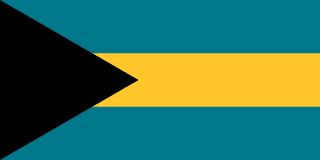
The Bahamas is an archipelago nation in the Atlantic Ocean, sitting just southeast of Florida and north of Cuba, made up of hundreds of low-lying islands.
The Bahamas' name likely comes from the Spanish 'baja mar,' meaning 'shallow sea,' referring to the extensive shallow banks surrounding the islands, or possibly from a Lucayan Indigenous word with a similar meaning.
Landscape: A low-lying archipelago of around 700 islands and cays, mostly flat coral limestone with extensive reefs.
Climate: Tropical, warm year-round with a wet season and hurricane risk.
Food: Conch, a large sea snail, is central to Bahamian cuisine, served raw as conch salad or fried as cracked conch.
Nassau, on the island of New Providence, has served as the Bahamas' capital since the 17th century, once notorious as a haven for pirates before becoming a formal British colonial administrative centre. With a population of around 275,000 across the metropolitan area, it remains home to the large majority of the country's total population.
The Caribbean flamingo, found in significant numbers on the island of Great Inagua, is the national bird, and the yellow elder is the national flower.
Bahamian straw work, weaving palm fronds into hats, baskets, and bags, is one of the country's most recognisable craft traditions, historically an important part of the local economy before tourism became dominant.
The Blue Holes of Andros, deep underwater sinkholes significant to both science and local folklore, and the pink sand beaches of Harbour Island are among the Bahamas' most distinctive natural landmarks. Pig Beach on Big Major Cay, where wild pigs swim in the shallow water to greet visitors, has become an unexpectedly popular and widely photographed attraction.
Great Inagua hosts one of the largest breeding colonies of Caribbean flamingos in the world, and the Bahamas' extensive shallow banks support significant populations of sea turtles and reef sharks.
The Bahamas is majority Christian, predominantly Protestant, and Junkanoo, a vibrant street parade with costumes, music, and dance held around Christmas and New Year, is the country's most significant cultural festival, with roots tracing back to enslaved West African communities.
The Bahamas' economy is dominated by tourism and offshore financial services rather than significant goods exports, given the country's limited industrial base and reliance on imports for most manufactured goods.
Independence Day on July 10th marks 1973, when the Bahamas gained sovereignty from British colonial rule, celebrated nationwide with concerts, fireworks, and the country's distinctive Junkanoo parade tradition. Junkanoo itself, held on Boxing Day and New Year's Day, is the Bahamas's most significant cultural celebration, a vibrant street parade with roots tracing back to enslaved West African communities. Fox Hill Day in August commemorates the emancipation news reaching a specific Nassau community historically.
Track and field holds particular significance in Bahamian sporting culture relative to the country's small population, the Bahamas having produced multiple Olympic medallists in sprinting, and sailing carries deep cultural roots too, reflected in the country's traditional wooden sloop racing regattas held throughout the year. Bahamian sailing has a strong regatta tradition using traditional wooden sloops built specifically for racing. The Bahamas has hosted several international sport fishing tournaments given its exceptional deep-sea fishing waters.
The Bahamas is a parliamentary constitutional monarchy, with the British monarch as ceremonial head of state represented domestically by a Governor-General, while a Prime Minister holds real executive power accountable to a bicameral parliament. The country consists of hundreds of islands and cays, though only a relatively small number are permanently inhabited. The Bahamas retains close constitutional and cultural ties to the United Kingdom despite its full independence. The Bahamas relies heavily on tourism and offshore financial services for its economic base.
Mount Alvernia, on Cat Island, is the Bahamas's highest point at just 63 metres, among the lowest national high points anywhere in the world, reflecting the country's low-lying coral and limestone geology. The lowest point sits at sea level around the archipelago's many islands.
There's no especially close match for the Bahamas's flag, the black triangle set against horizontal aquamarine-gold-aquamarine stripes is a genuinely distinctive combination among Caribbean flags, most of which favour simpler striped or central-emblem designs rather than this particular triangle-and-stripe arrangement.
Adopted in 1973 upon independence from Britain, chosen from a national design competition.
Home to the world's largest colony of pink flamingos, and made up of over 700 islands, only about 30 of which are inhabited.
Play today's Flagpie →© Flagpie 2026