
Asia
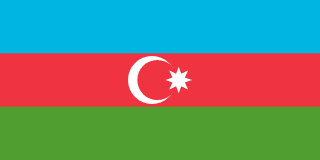
Azerbaijan sits on the western coast of the Caspian Sea in the South Caucasus, bordered by Russia to the north, Georgia to the northwest, Armenia to the west, and Iran to the south.
Azerbaijan's name likely derives from an ancient Persian phrase meaning 'land of fire,' a fitting reference given the region's natural gas seepages, which have produced naturally burning flames for centuries in some areas.
Landscape: Includes the Caucasus Mountains, the fertile Kura-Aras lowland, and a coastline on the landlocked Caspian Sea.
Climate: Varies hugely by region, from subtropical along the Caspian coast to alpine in the mountains.
Food: Plov, a rice dish with a wide range of regional variations, is considered the national dish.
Baku has been a significant Caspian Sea port for centuries, and its name is sometimes linked to a Persian phrase meaning 'wind-pounded city,' referencing the strong winds the city regularly experiences. With a population of around 2.3 million, it grew rapidly during early 20th-century oil booms and remains the country's dominant economic centre.
The Karabakh horse, a distinctive breed native to the region, is closely tied to Azerbaijani identity, and fire holds deep symbolic significance nationally, referenced directly in the country's nickname, 'Land of Fire.'
Azerbaijani carpet weaving, recognised by UNESCO, has distinct regional styles developed over centuries, and traditional Azerbaijani copperwork, particularly from the town of Lahij, remains an actively practised craft. Azerbaijani mugham music, a classical improvisational style recognised by UNESCO, remains an actively performed and taught tradition central to the country's musical identity.
The Flame Towers in Baku, striking modern skyscrapers shaped to evoke flames, reflect the country's 'Land of Fire' identity in contemporary architecture, and Yanar Dag, a hillside that has burned continuously for decades due to underground gas seepage, is a more literal example of the same theme.
Azerbaijan's mountainous regions support the Caucasian leopard, one of the rarest big cats in the world, and its Caspian Sea coastline is home to the Caspian seal, found nowhere else.
Azerbaijan is majority Muslim, predominantly Shia, though the country is constitutionally secular, and Azerbaijani culture reflects a blend of Turkic, Persian, and Caucasian influences shaped by its position at a historic regional crossroads.
Azerbaijan is a significant exporter of crude oil and natural gas, with hydrocarbon revenue forming the overwhelming majority of the country's export earnings.
Independence Day on May 28th marks 1918, when Azerbaijan briefly became the first secular democratic republic in the Muslim world, a distinction held with particular national pride even though that first republic lasted only two years before Soviet annexation. Novruz, the Central Asian and Persian spring New Year, is celebrated with particular enthusiasm, involving bonfire-jumping and elaborate traditional feasts. Azerbaijan's Republic Day in May commemorates the 1918 founding of the short-lived first Azerbaijani republic.
Wrestling and combat sports more broadly hold significant places in Azerbaijani sporting culture, the country having produced numerous Olympic medallists in wrestling, judo, and boxing. Chess also carries genuine cultural weight, Azerbaijan having produced several world-class grandmasters, and the country has invested significantly in hosting major international sporting events, including Formula One racing. Azerbaijani gymnastics has grown significantly through major state investment in recent years.
Azerbaijan is a presidential republic, with a President holding substantial executive authority alongside a single-chamber National Assembly. The country's relationship with neighbouring Armenia, particularly regarding the Nagorno-Karabakh region which Azerbaijan reclaimed full control over in a 2023 military operation, has remained a defining feature of its foreign and domestic politics for decades. Azerbaijan's oil and gas wealth has funded substantial infrastructure and urban development since independence. Azerbaijan's capital, Baku, has hosted major international events including Formula One and the Eurovision Song Contest.
Bazardüzü, on the border with Russia, is Azerbaijan's highest point at 4,466 metres. The lowest point sits at around 28 metres below global sea level along the country's Caspian Sea coastline, since the landlocked Caspian sits well below the ocean's own level.
Turkmenistan's flag shares a similar light-blue field and crescent-and-star symbolism with Azerbaijan's, though Turkmenistan's flag carries an elaborate carpet-pattern stripe that Azerbaijan's simpler three-band horizontal design doesn't have, different enough overall that the two aren't especially likely confused despite both drawing on Turkic and Islamic symbolism.
First adopted in 1918, suppressed during Soviet rule, and formally restored in 1991 upon independence.
Sometimes called the 'Land of Fire,' due to naturally occurring gas seeps that have burned continuously for decades.
Play today's Flagpie →© Flagpie 2026