
Europe
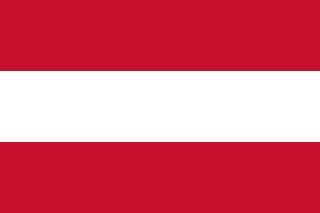
Austria is a landlocked country in Central Europe, bordered by Germany and Czechia to the north, Slovakia and Hungary to the east, Slovenia and Italy to the south, and Switzerland and Liechtenstein to the west.
Austria's name comes from the German 'Österreich,' meaning 'eastern realm,' reflecting its historical position as the eastern frontier of the Holy Roman Empire against various eastern peoples and territories.
Landscape: Largely alpine, with the Alps covering around 62% of the country, alongside the Danube river valley and low hills to the east.
Climate: Temperate, cold alpine winters with heavy snow, mild summers in the lowlands.
Food: Wiener schnitzel and apple strudel are Austria's best known dishes, alongside a strong coffee house culture centred on Vienna.
Vienna has been significant since Roman times and became capital of the Habsburg Empire, one of the most powerful dynasties in European history, growing into a major cultural and political centre for centuries. With a population of around 2 million, it remains renowned for its classical music history, home to composers including Mozart, Beethoven, and Strauss. Vienna is regularly ranked among the most liveable cities in the world, and its historic centre, largely preserved from its imperial era, remains one of the most architecturally intact in Europe.
The golden eagle appears on Austria's coat of arms, and edelweiss, the small white alpine flower shared symbolically with Switzerland, is closely associated with Austrian mountaineering and alpine culture.
Austrian dirndl and lederhosen, shared with neighbouring Bavaria in Germany, remain genuinely worn at regional festivals, and Austria has a long tradition of fine glassware and crystal, particularly through the Swarovski company founded in the late 19th century. Viennese coffee house culture, recognised by UNESCO as intangible cultural heritage, is itself treated as a genuine national tradition, dating back centuries and central to the city's social and intellectual life.
Schönbrunn Palace, the former summer residence of the Habsburg emperors, is Austria's most visited landmark, alongside Hallstatt, a lakeside village with one of the oldest salt mines in the world, worked for thousands of years.
The Alpine ibex and golden eagle are both found in Austria's mountainous regions, and the country's national parks protect significant areas of alpine and forest habitat.
Austria is historically and predominantly Roman Catholic, reflecting its long Habsburg history, though religious observance has declined notably among younger generations in recent decades.
Austria is a significant exporter of machinery, cars and automotive parts, and pharmaceuticals, with a strong manufacturing base closely integrated with neighbouring Germany's economy.
National Day on October 26th marks the 1955 declaration of permanent neutrality following the end of post-war Allied occupation, a distinctly Austrian holiday tied to its unique Cold War-era political position. Christmas markets, running through Advent in cities like Vienna and Salzburg, have become one of the country's most internationally recognised cultural exports, and Fasching, Austria's carnival season, culminates in elaborate balls, particularly in Vienna. Krampus processions in early December, featuring frightening horned figures accompanying Saint Nicholas, remain a distinctly Austrian and wider Alpine folk tradition.
Alpine skiing is treated as something close to a national obsession in Austria, the country having produced a remarkable number of the sport's most successful competitors, and ski racing results are followed with genuine nationwide attention each winter. Football also holds a significant following, and Austria has a long, storied tradition in ski jumping too.
Austria is a federal parliamentary republic, with a directly elected President serving a largely ceremonial role and a Chancellor holding real executive power, accountable to the National Council. The country has maintained a policy of permanent military neutrality since 1955, a defining feature of its foreign policy that predates and has persisted through its later European Union membership.
Grossglockner, in the Austrian Alps, is the country's highest point at 3,798 metres, its dramatic glaciated slopes drawing mountaineers since the 18th century. The lowest point is near Apetlon by Lake Neusiedl, sitting around 115 metres above sea level, still Austria's lowest point despite being well above true sea level, since the country is entirely landlocked.
Latvia's flag shares Austria's exact red-white-red horizontal structure, differing mainly in a darker, more maroon shade of red, close enough that the two are genuinely easy to mix up without a side-by-side comparison. Peru also uses the identical red-white-red layout, though typically shown with its own coat of arms at the centre in official versions, distinguishing it from Austria's plain design.
One of the oldest flag designs still in use, tracing back to a 13th-century legend involving Duke Leopold V, formally adopted in its current form in 1918.
Home to the Hallstatt salt mine, believed to be the oldest salt mine in the world, worked for over 7,000 years.
Play today's Flagpie →© Flagpie 2026