
Oceania
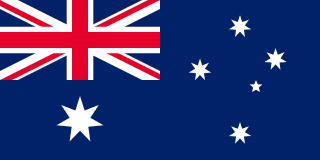
Australia is both a country and the smallest continent, sitting in the Southern Hemisphere between the Indian and Pacific Oceans, with New Zealand to its southeast and Indonesia and Papua New Guinea to its north.
Australia's name comes from the Latin phrase 'terra australis,' meaning 'southern land,' used by European mapmakers for a hypothetical southern continent long before it was actually charted, and formally adopted once the continent itself was confirmed and settled by the British.
Landscape: Mostly arid or semi-arid desert making up the interior ('the outback'), with fertile coastal areas where most of the population actually lives.
Climate: Ranges from tropical in the north to temperate in the south, with a large arid desert climate across the centre.
Food: A meat pie is considered the closest thing to a national dish, alongside a lamington and, more recently, a strong modern café culture built around flat whites.
Canberra was purpose-built as Australia's capital, chosen as a compromise between rival cities Sydney and Melbourne, who both wanted the role, and its name likely derives from an Aboriginal word meaning 'meeting place.' Construction began in the 1910s, and with a population of around 460,000, it remains considerably smaller than either of the two cities it was designed to settle a rivalry between.
The kangaroo and emu together form Australia's coat of arms, chosen partly because neither animal can walk backwards easily, a detail often cited as symbolising a nation moving only forward. The golden wattle is the official national flower.
Aboriginal and Torres Strait Islander art, including dot painting and bark painting traditions that stretch back tens of thousands of years, represents some of the oldest continuous artistic traditions in the world, still actively practised and increasingly recognised internationally.
Uluru, a massive sandstone monolith sacred to the local Anangu people, is one of Australia's most recognisable natural landmarks, alongside the Great Barrier Reef, the largest coral reef system on Earth, and the Sydney Opera House, completed in 1973.
Australia's isolation has produced an extraordinarily high number of species found nowhere else, including kangaroos, koalas, and platypuses, alongside a significant share of the world's venomous snakes and spiders.
Australia has no official religion, and a growing share of the population identifies with no religion at all, though Christianity remains the largest single faith group. Aboriginal and Torres Strait Islander peoples represent the country's oldest continuous cultures, alongside significant immigrant communities from across Asia, Europe, and the Middle East.
Australia is one of the world's largest exporters of iron ore, coal, and natural gas, alongside agricultural products like wool and beef, with mining forming a particularly large share of its export economy.
Australia Day on January 26th marks the 1788 arrival of the First Fleet at Sydney Cove, though the date remains a subject of genuine ongoing national debate given its association with the beginning of British colonisation and its impact on Aboriginal and Torres Strait Islander peoples. ANZAC Day on April 25th, shared with New Zealand, commemorates military personnel who served and died in past conflicts, marked with dawn services held nationwide.
Australian rules football, a distinctly local sport invented in Melbourne in the 1850s, holds the largest following domestically, particularly in the southern states, while cricket carries deep historical and cultural weight nationwide, especially through the long-standing rivalry with England for the Ashes. Australia has also become a genuine world power in swimming, regularly producing Olympic medallists relative to its comparatively small population.
Australia is a federal parliamentary democracy and constitutional monarchy, with the British monarch as ceremonial head of state represented domestically by a Governor-General, while a Prime Minister holds actual executive power. Voting is compulsory for all eligible citizens, a distinctive feature that consistently gives Australia some of the highest voter turnout rates of any democracy in the world.
Mount Kosciuszko, in the Snowy Mountains, is Australia's highest point on the mainland at 2,228 metres, notably modest compared to peaks on most other continents given Australia's generally flat, ancient geology. Lake Eyre, a usually-dry salt lake in the interior, holds the lowest point at around 15 metres below sea level.
New Zealand's flag is Australia's closest match by a wide margin, both carry the Union Jack in the canton with red stars representing the Southern Cross in the fly, differing mainly in exact star count and colour, Australia uses white stars with an additional Commonwealth Star, New Zealand's are red with white borders and one fewer star overall. Beyond that one close match, no other flag comes close to this specific combination.
Chosen via a public design competition in 1901, five near-identical entries split the prize, and the design has only had minor adjustments since, mainly to the Commonwealth Star as new territories were added.
Home to more UNESCO-listed natural World Heritage Sites than any other country, including the Great Barrier Reef.
Play today's Flagpie →© Flagpie 2026