
Asia
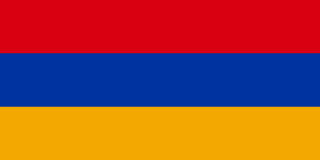
Armenia is a small, landlocked country in the South Caucasus, bordered by Georgia to the north, Azerbaijan to the east, Iran to the south, and Turkey to the west.
Armenia's name has ancient roots, appearing in historical records for close to three thousand years, though Armenians themselves call their country Hayk or Hayastan, tied to a legendary founding figure in Armenian tradition.
Landscape: Mountainous and landlocked, dominated by the Armenian Highlands, with Mount Ararat visible just across the border in Turkey.
Climate: Continental highland, cold winters and hot, dry summers.
Food: Khorovats, Armenian-style barbecued meat, is a genuine national staple, alongside lavash, a thin flatbread recognised by UNESCO for its cultural significance.
Yerevan is one of the oldest continuously inhabited cities in the world, with a documented history stretching back over 2,800 years, older than Rome. With a population of around 1.1 million, it sits within view of Mount Ararat, a mountain of deep symbolic significance to Armenians despite now lying just across the border in Turkey.
Mount Ararat, though no longer within Armenia's borders, remains the country's most powerful national symbol, appearing on the coat of arms, and the apricot is closely associated with Armenian identity and cuisine.
Armenian khachkar carving, elaborately decorated cross-stones, is a distinctive medieval Armenian art form recognised by UNESCO, and Armenian carpet weaving has a documented history going back well over a thousand years. Armenian pomegranate symbolism runs deep through the country's art and cuisine, representing fertility and abundance in traditional Armenian belief.
The Geghard Monastery, partially carved directly into a mountainside, and the ancient temple of Garni, one of the few Greco-Roman structures remaining in the former Soviet Union, are both significant Armenian historic sites. Lake Sevan, one of the largest high-altitude lakes in the world, is both a significant ecological resource and a popular domestic tourist destination.
The Armenian mouflon, a wild sheep species, and the Caucasian leopard, critically endangered, are both found in Armenia's mountainous terrain.
Armenia was the first country in the world to formally adopt Christianity as a state religion, in 301 AD, and the Armenian Apostolic Church remains deeply tied to national identity, particularly given the historical trauma of the Armenian genocide during the early 20th century.
Armenia is a significant exporter of copper and other minerals, alongside brandy, a particularly prized national product with a long production history.
Independence Day on September 21st marks 1991, when Armenia declared sovereignty following the collapse of the Soviet Union. Genocide Remembrance Day on April 24th commemorates the mass killing of Armenians during the First World War era under the Ottoman Empire, an event of profound and continuing significance to Armenian national identity, marked with solemn processions to the genocide memorial in Yerevan. Armenia's Constitution Day in July marks the 1995 adoption of the country's post-Soviet founding document.
Chess holds a genuinely unique place in Armenian national culture, the country having produced multiple world champions and world-leading teams relative to its very small population, with chess taught as a compulsory school subject nationwide. Wrestling and weightlifting have also produced numerous Armenian Olympic medallists across the decades. Armenian boxing has also produced multiple Olympic medallists across recent decades.
Armenia is a parliamentary republic, with a largely ceremonial President as head of state and a Prime Minister holding real executive power, accountable to a single-chamber National Assembly. The country's relationship with neighbouring Azerbaijan, particularly regarding the disputed Nagorno-Karabakh region, has remained a defining and often volatile feature of Armenian foreign policy for decades. Armenia's diaspora, considerably larger than its resident population, maintains significant cultural and political influence.
Mount Aragats is Armenia's highest point at 4,090 metres, considerably lower than nearby Mount Ararat, which holds deep symbolic significance for Armenians despite now sitting across the border in Turkey. The lowest point is along the Debed river valley, sitting around 375 metres above sea level, Armenia's lowest point despite being well above true sea level, since the country is entirely landlocked.
There's no especially close match for Armenia's flag, the red-blue-orange horizontal tricolour is a genuinely uncommon combination among national flags worldwide, distinctive enough that it isn't easily confused with any other country's design despite the simple three-stripe format shared with dozens of flags globally.
First adopted in 1918 for the short-lived First Republic of Armenia, suppressed during the Soviet era, and formally restored in 1990.
Home to Lake Sevan, one of the largest high-altitude lakes in the world.
Play today's Flagpie →© Flagpie 2026