
South America
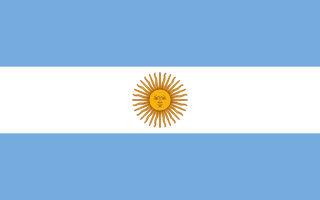
Argentina is a country in South America, stretching down the continent's eastern side from Bolivia and Paraguay in the north to the tip of South America in the south, with Chile along its entire western border and the Atlantic Ocean to the east. Its name comes from the Latin argentum, meaning silver, after early Spanish explorers heard stories of silver mountains in the region.
Argentina's name comes from the Latin 'argentum,' meaning silver, after early Spanish explorers heard stories of silver mountains somewhere in the region, a resource that, ironically, never really materialised there the way the name suggests.
Landscape: Spans the Andes mountains in the west, the fertile Pampas plains in the centre, and Patagonia's dramatic, sparsely populated terrain in the south.
Climate: Ranges from subtropical in the north to cold, windswept conditions in Patagonia and the far south.
Food: Beef is central to Argentine cuisine, particularly asado, a style of barbecue, alongside empanadas and dulce de leche.
Buenos Aires was founded twice, first in 1536 and again in 1580 after the original settlement was abandoned following conflict with Indigenous groups. With a population of around 3 million in the city itself, and closer to 15 million across greater Buenos Aires, it became Argentina's dominant political and cultural centre partly through its role as the country's main port.
The rufous hornero, a small bird known for building distinctive oven-shaped mud nests, is Argentina's national bird. The ceibo flower, with vivid red blooms, is the national flower, and the horse holds significant cultural symbolism tied to the gaucho, Argentina's iconic cattle-herding cowboy figure.
The gaucho tradition has shaped much of Argentina's rural craft culture, including leatherwork, silver-inlaid knives, and mate gourds used for drinking the traditional herbal tea. Tango, both the music and dance, originated in Buenos Aires in the late 19th century and remains one of the country's most recognised cultural exports.
Iguazú Falls, shared with Brazil, is one of the largest waterfall systems in the world and among Argentina's most visited natural landmarks, alongside Perito Moreno Glacier in Patagonia, one of the few glaciers in the world still advancing rather than retreating.
Patagonia is home to guanacos, a wild relative of the llama, alongside significant populations of penguins and marine mammals along its coastline. The Andean condor, one of the largest flying birds in the world, is found across Argentina's western mountain regions.
Argentina is historically and predominantly Roman Catholic, and was home to Pope Francis, the first pope from the Americas, before his election in 2013. The country also has significant Protestant and Jewish communities, the latter among the largest in Latin America.
Argentina is one of the world's largest exporters of soybeans and beef, alongside wheat and other grains, with agriculture forming a historically central part of the country's economy and export earnings.
May Revolution Day on May 25th marks the 1810 uprising against Spanish colonial rule that set Argentina on the path to independence, and Independence Day itself on July 9th marks the formal 1816 declaration. Día de la Tradición in November celebrates gaucho culture and rural heritage, a significant part of Argentine national identity. Día de la Bandera in June honours the national flag and its designer, Manuel Belgrano, marked particularly at the Monumento a la Bandera in Rosario, the city where the flag was first raised.
Football is treated with something close to religious devotion in Argentina, the country having won the World Cup three times and produced some of the sport's most celebrated players in history. Polo also holds particular prestige, Argentina widely regarded as producing the best players and horses in the sport worldwide, and rugby has grown significantly in popularity in recent decades.
Argentina is a federal presidential republic, with a President serving as both head of state and government, elected for four-year terms. The country's 23 provinces retain significant independent authority, and Argentina's political history has included periods of both democratic and military rule across the 20th century, with democracy firmly restored since 1983.
Aconcagua, in the Andes, is Argentina's highest point at 6,961 metres, the tallest peak in both the Western and Southern Hemispheres, drawing mountaineers from around the world. Laguna del Carbón, in Patagonia, holds the lowest point at around 105 metres below sea level, one of the lowest points in the Americas.
Uruguay's flag shares Argentina's exact blue-and-white palette and even the same golden Sun of May emblem, tracing back to a shared origin in the 1810 revolution both countries' independence movements grew from, though Uruguay adds several horizontal stripes that Argentina's flag doesn't have. Beyond that especially close cousin, Nicaragua and Guatemala both use blue-and-white horizontal designs too, different enough in exact shade and layout that they're less likely to cause confusion specifically with Argentina.
Designed by Manuel Belgrano.
First raised in 1812 during the fight for independence from Spain, with the golden 'Sun of May' added to the centre in 1818.
Home to Aconcagua, the highest mountain in the Americas.
Play today's Flagpie →© Flagpie 2026