
North America
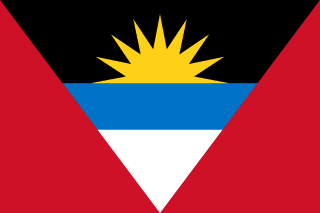
Antigua and Barbuda is a two-island country in the Caribbean Sea, part of the Lesser Antilles, sitting east of Puerto Rico and north of Guadeloupe.
Antigua's name comes from Santa María la Antigua, a church in Seville, Spain, after which Christopher Columbus named the island in 1493. Barbuda's name likely refers to the bearded fig trees once found there, or possibly to the bearded appearance of local Indigenous men as described by early explorers.
Landscape: Two low-lying coral and limestone islands with extensive white sand beaches and very little natural fresh water.
Climate: Tropical, warm year-round with a wet season and hurricane risk.
Food: Fungee and pepperpot, a cornmeal dish served with a spiced vegetable and meat stew, is considered the national dish.
St. John's, on Antigua, has served as the country's capital since British colonial times, its natural harbour making it valuable for both trade and naval defence historically. With a population of around 22,000, it remains a relatively small but genuinely bustling regional port city.
The frigate bird, found in significant numbers on Barbuda, and the Antigua black pineapple, a particularly sweet variety grown on the island for centuries, are both closely tied to national identity.
Traditional Antiguan pottery, using techniques passed down from Indigenous Arawak communities, remains practised in some rural areas, and steelpan and calypso music traditions, shared across the wider Caribbean, are significant cultural exports.
Nelson's Dockyard, a restored 18th-century British naval base, is a UNESCO World Heritage Site, and Barbuda's Frigate Bird Sanctuary hosts one of the largest colonies of these birds in the world. The island of Antigua is said to have 365 beaches, one for every day of the year, a claim used widely in the country's tourism branding.
Barbuda's lagoon supports one of the largest frigate bird colonies in the Caribbean, and Antigua's surrounding reefs support significant sea turtle populations.
Antigua and Barbuda is majority Christian, predominantly Protestant, reflecting British colonial history, and the country's population is largely of African descent, tracing back to the transatlantic slave trade era. Antigua's Carnival, held each summer, is the country's most significant cultural celebration, commemorating the abolition of slavery with music, costume, and parade traditions dating back to the 1950s.
Antigua and Barbuda's economy is dominated by tourism rather than significant goods exports, given the country's small size and limited industrial base.
Independence Day on November 1st marks 1981, when the twin islands gained sovereignty from British colonial rule. Carnival, held over roughly ten days each summer, is the country's most significant cultural celebration, commemorating the abolition of slavery with music, costume, and parade traditions that draw the Antiguan diaspora home from around the world.
Cricket holds the largest following in Antigua and Barbuda, the islands having produced several players for the historically dominant West Indies cricket team, and the Sir Vivian Richards Stadium, named after one of the sport's greatest ever batsmen, reflects the country's deep cricketing pride. Sailing also carries significant cultural weight given the islands' strong yachting tourism industry. Antiguan athletics has produced Olympic competitors despite the country's very small population base. The islands host an annual sailing week that draws international competitors each spring.
Antigua and Barbuda is a parliamentary constitutional monarchy, with the British monarch as ceremonial head of state represented domestically by a Governor-General, while a Prime Minister holds real executive power accountable to a bicameral parliament. Barbuda, the smaller of the two islands, retains its own local council with significant autonomy over island-specific affairs. The islands transitioned from a British colony to independence gradually, first gaining internal self-governance in 1967. The islands' citizenship-by-investment programme has become a notable source of government revenue. The dual-island nation's small population gives every citizen an unusually direct relationship with national politics.
Boggy Peak (Mount Obama), on Antigua, is the country's highest point at 402 metres. The lowest point sits at sea level around both islands' coastlines.
There's no especially close match for Antigua and Barbuda's flag, the black-blue-white horizontal bands topped by a rising golden sun within a red-bordered triangle make it a distinctive and unusual combination among Caribbean flags, most of which favour simpler striped or single-emblem designs.
Designed by Sir Reginald Samuel.
Adopted in 1967 when the islands gained self-governance from Britain, kept unchanged through full independence in 1981.
Said to have 365 beaches, one for every day of the year.
Play today's Flagpie →© Flagpie 2026