
Europe
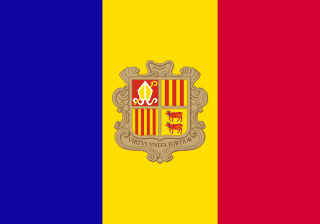
Andorra is a tiny country tucked high in the Pyrenees mountains between France to the north and Spain to the south.
Andorra's name origin is uncertain, with theories ranging from a Basque word for a wooded pasture to a Moorish term, no single explanation is definitively confirmed by historians.
Landscape: Entirely mountainous, sitting high in the Pyrenees between France and Spain, with no flat land to speak of.
Climate: Alpine, cold snowy winters and mild summers, varying significantly with altitude.
Food: Trinxat, mashed potato and cabbage fried with bacon, is a traditional Andorran dish reflecting its Catalan and Pyrenean roots.
Andorra la Vella has served as capital of the small co-principality for centuries, with the exact founding date lost to history, though the country's parliament, the Council of the Land, dates back to 1419, making it one of the oldest continuously functioning parliaments in Europe. With a population of around 23,000, it's the smallest and highest-altitude capital city in Europe.
The cow appears prominently in Andorran heraldry and rural tradition, reflecting the country's historic agricultural and pastoral economy before tourism and banking became dominant.
Andorran wrought ironwork and traditional Pyrenean woodworking both reflect the country's mountain heritage, and traditional dance and folk costume remain genuinely performed at the country's annual festivals. Traditional Andorran cattle branding and shepherding practices, though less economically central today, remain part of the country's cultural heritage and are still occasionally demonstrated at local festivals.
The Casa de la Vall, Andorra's former parliament building dating to the 16th century, and the Romanesque churches scattered across the country's valleys reflect Andorra's long history as a small, semi-independent mountain territory. Andorra's extensive network of ski resorts has made winter tourism the backbone of the modern economy, drawing visitors from across neighbouring France and Spain.
Andorra's Pyrenean mountain terrain supports chamois, a nimble goat-antelope species, and golden eagles, both well adapted to the country's steep, high-altitude landscape.
Andorra is historically and predominantly Roman Catholic, with the Bishop of Urgell in Spain still formally serving as one of the country's two co-princes alongside the President of France, a genuinely unique constitutional arrangement.
Andorra's economy is built primarily around tourism, particularly winter sports and tax-free shopping, alongside financial services, rather than significant goods exports given the country's small size and limited industry.
National Day on September 8th, also Our Lady of Meritxell Day, honours Andorra's patron saint and is the country's most significant public holiday, marked with religious processions and public festivities in the small mountain nation's villages. Given Andorra's tiny size, many of its most significant celebrations remain genuinely local and village-based rather than large-scale national events. Andorra's local village festivals often stretch across several days, reflecting the country's close-knit community structure.
Skiing holds outsized significance in Andorra given its entirely mountainous Pyrenean terrain, with winter sports tourism forming a central part of both national identity and the modern economy. Football and rugby both also draw modest domestic followings, even without significant international competitive success to match, given the country's very small population. Andorran athletes regularly compete at the Winter Olympics despite the country's very small population.
Andorra is a parliamentary co-principality, an unusual constitutional arrangement in which two co-princes, the President of France and the Spanish Bishop of Urgell, serve jointly as heads of state, a genuinely unique structure found nowhere else in the world. Day-to-day governance sits with an elected Head of Government accountable to the General Council, Andorra's parliament. This co-principality arrangement dates back to a 1278 agreement resolving a feudal dispute, remarkably still in effect today.
Coma Pedrosa is Andorra's highest point at 2,942 metres. The lowest point is where the Valira river exits the country near the Spanish border, sitting around 840 metres above sea level, Andorra's lowest point despite being well above true sea level, since the country is entirely mountainous and landlocked.
France and Romania both use the same blue-yellow-red vertical tricolour Andorra does, though Andorra's own coat of arms at the centre, combining symbols of its two co-princes, sets it apart clearly from Romania's plain design, and its specific colour ordering differs from France's own blue-white-red arrangement.
Adopted in its current form in 1866, based on French and Spanish tricolour traditions given Andorra's unique position as a co-principality historically overseen by both France and the Bishop of Urgell in Spain.
Its capital, Andorra la Vella, is the highest-altitude capital city in Europe.
Play today's Flagpie →© Flagpie 2026