
Asia
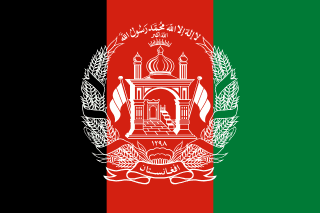
Afghanistan is a landlocked, mountainous country in South-Central Asia, bordered by Iran to the west, Turkmenistan, Uzbekistan, and Tajikistan to the north, China to the northeast, and Pakistan to the east and south.
Afghanistan's name combines 'Afghan,' historically referring to the Pashtun people, with the Persian suffix 'stan,' meaning 'land of,' giving the country's name the straightforward meaning of 'land of the Afghans.'
Landscape: Mostly mountainous, dominated by the Hindu Kush range, with desert lowlands in the south and west.
Climate: Arid to semi-arid continental, extreme temperature swings between summer and winter, colder at higher elevations.
Food: Kabuli palaw, a spiced rice dish with lamb, raisins and carrots, is widely considered the national dish.
Kabul has been a significant city for over 3,000 years, strategically positioned along historic trade routes between Central and South Asia, and has served as Afghanistan's capital since the 18th century. With a population of around 4.4 million, it remains the country's political and economic centre despite decades of conflict having significantly affected its infrastructure.
The snow leopard, found in Afghanistan's remote mountain regions, is closely associated with the country's rugged terrain, and the tulip, growing wild in some Afghan valleys, holds particular cultural significance.
Afghan carpet weaving has an international reputation built over centuries, with regional styles varying significantly, and traditional Afghan lapis lazuli mining and craftsmanship draws on some of the oldest known sources of the stone in the world. Afghan embroidery, particularly from the Herat and Kandahar regions, features distinctive mirror work and intricate needlework passed down through generations of women.
The Minaret of Jam, a 12th-century tower in a remote valley, and the Bamiyan Valley, once home to two enormous ancient Buddha statues destroyed in 2001, are both significant historic sites reflecting Afghanistan's long, layered history.
The snow leopard and Marco Polo sheep, known for its enormous curling horns, are both found in Afghanistan's remote Wakhan Corridor, one of the most isolated regions in Central Asia.
Afghanistan is overwhelmingly Muslim, and the country is home to numerous distinct ethnic groups, including Pashtun, Tajik, Hazara, and Uzbek populations, each with their own language and cultural traditions. Afghan hospitality customs, deeply rooted in Pashtun cultural codes like Pashtunwali, remain a significant and genuinely observed part of everyday social life.
Afghanistan has historically exported carpets, dried fruits, and precious stones, though decades of conflict have significantly limited formal trade infrastructure and comprehensive economic data.
Nowruz, the Persian New Year marking the spring equinox, is widely celebrated across Afghanistan despite periods of official discouragement, predating Islam and shared with Iran and several Central Asian neighbours. Independence Day on August 19th marks 1919, when Afghanistan gained full sovereignty over its foreign affairs from British influence following the third Anglo-Afghan War. Farmers' Day in March recognises the significant role of agriculture in the country's traditional economy.
Buzkashi, a traditional and physically demanding sport involving horseback riders competing to place a goat or calf carcass in a scoring circle, is widely regarded as Afghanistan's national sport, with deep roots in the country's Central Asian nomadic and equestrian heritage. Cricket has also grown rapidly in popularity in recent years, with the national team achieving notable success on the international stage.
Afghanistan's political situation has undergone dramatic change in recent years, with the Taliban having retaken control of the country in 2021 following the withdrawal of international forces, establishing an Islamic Emirate governed according to their interpretation of Islamic law, a significant shift from the preceding two decades of internationally supported republican government. The country's governance remains subject to significant international non-recognition, complicating its formal diplomatic status.
Noshaq, in the Hindu Kush near the border with Pakistan, is Afghanistan's highest point at 7,492 metres, the second-highest peak in the world outside the Himalaya and Karakoram ranges. The lowest point is along the Amu Darya river valley in the country's north, sitting around 258 metres above sea level.
There's no especially close match for Afghanistan's current flag, though the country's flag has changed roughly 20 times since 1901, more than almost any other nation, reflecting its frequent changes in government, meaning at various points in its history it has resembled several different regional design traditions depending on which government was in power.
Has changed more times than almost any other country's flag, roughly 20 different versions since 1901, reflecting the country's frequent changes in government.
Home to the Wakhan Corridor, a narrow strip of land that stretches all the way to touch the border of China.
Play today's Flagpie →© Flagpie 2026